
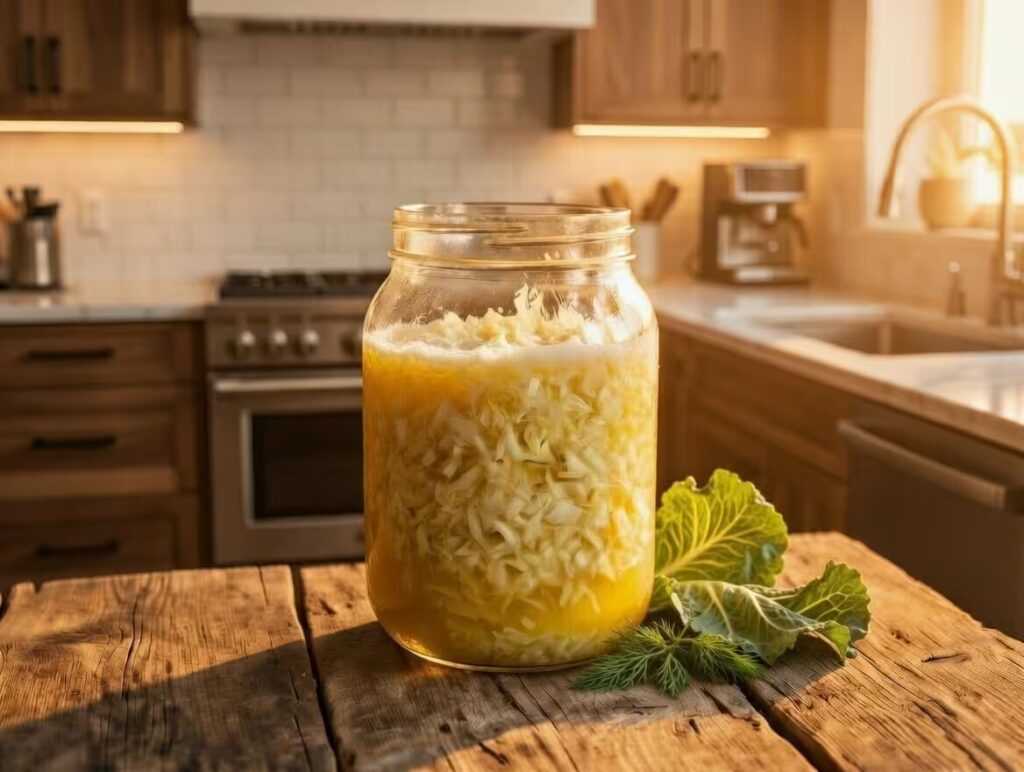
Sauerkraut bitter enough to pucker has a handful of distinct causes — over-fermentation, excess salt, cabbage variety, temperature trouble, or oxidation — and most of them are fixable, either in the jar or at the table. Bitter is not the same as spoiled, and it doesn’t mean the batch is lost.
Bitter Sauerkraut – Quick Diagnosis Table
| Symptom | Likely Cause | Fix |
|---|---|---|
| Bitter throughout, got worse over time | Over-fermentation | Refrigerate immediately; rinse before serving |
| Sharp, harsh, salty-bitter | Too much salt | Rinse; pair with fat; weigh salt next batch |
| Bitter from the start, raw cabbage tasted sharp | Cabbage variety | Cook it; use fresh green cabbage next time |
| Bitter and fast-fermenting, warm kitchen | Temperature too high | Move to cooler spot; refrigerate at peak flavor |
| Bitter at the top, normal flavor below | Oxidation | Remove top layer; check submersion going forward |
Is Bitter Sauerkraut Safe to Eat?
Yes, bitter sauerkraut is usually safe to eat as long as there is no mold, putrid smell, or slimy brine. Bitter flavor is a fermentation or ingredient problem, not a safety signal. Lacto-fermented sauerkraut is acidified by lactic acid bacteria, and that acid environment is what makes it shelf-stable and resistant to harmful organisms. Bitterness comes from different chemistry entirely — glucosinolate breakdown, salt concentration, oxidation, or prolonged fermentation — none of which indicate contamination.
 Take Heed: Discard if you see fuzzy mold growth (not flat white film), smell something putrid rather than sour, or the brine has turned slimy. Bitter alone is not a discard condition.
If you’re unsure whether the flavor is bitter or just extremely sour, they’re easy to distinguish: sourness is sharp and acidic at the sides of the tongue; bitterness settles at the back and lingers.
The Most Common Causes of Bitter Sauerkraut
Over-Fermentation
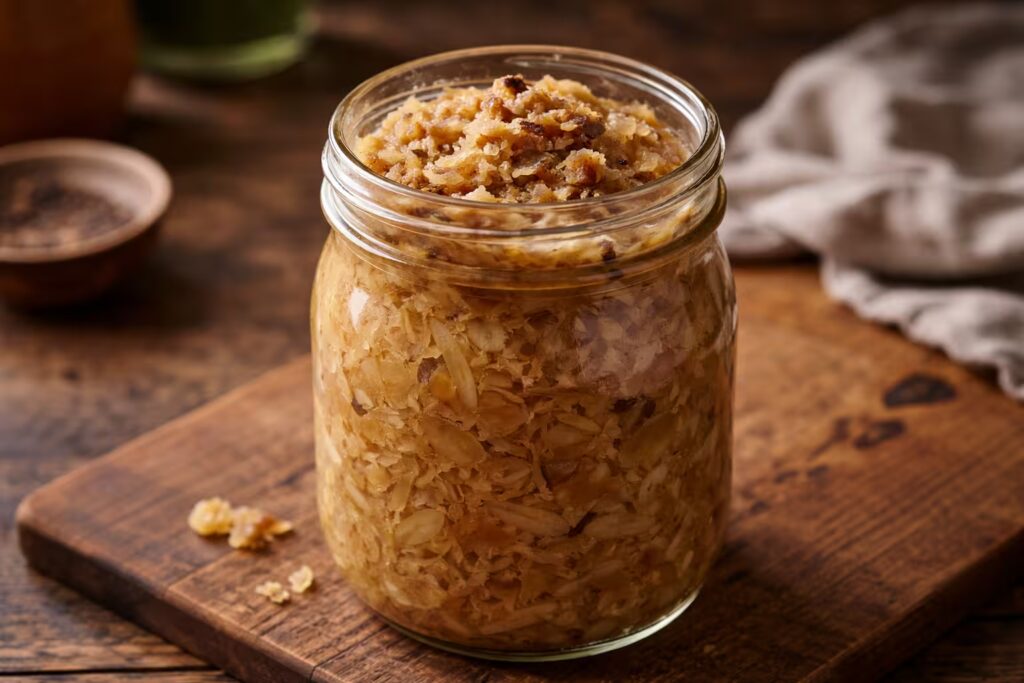
The longer sauerkraut ferments, the more complex — and eventually harsh — its flavor becomes. Past a certain point, secondary bacterial activity and continued acid production push the flavor from pleasantly sour into bitter territory. This is especially common in warm kitchens where fermentation moves faster than expected.
Fix: Taste your kraut starting around day 7. Once it reaches the flavor you want, move it to the refrigerator — cold slows fermentation dramatically. A batch that’s already bitter from over-fermentation won’t reverse in the jar, but rinsing the kraut briefly under cold water reduces surface acidity and takes some of the edge off. Cooking with it (soups, braises, pork dishes) mellows bitterness more than raw serving will.
 Old School Tip: Cold is your off switch. The refrigerator doesn’t stop fermentation entirely, but it slows it enough that flavor holds for weeks rather than days.
For a fuller guide on timing, When Is Sauerkraut Done Fermenting walks through the tasting and texture cues at each stage.
Too Much Salt
Salt has two roles in sauerkraut: it draws out moisture and it controls which bacteria dominate. Too much of it — above roughly 2.5% by weight — creates an environment where desirable bacteria struggle to compete, fermentation stalls or progresses unevenly, and the kraut tastes sharp and bitter rather than sour. Under-salting causes its own problems, but excess salt is a reliable path to bitterness.
Fix: If the batch is already made, rinsing reduces perceived saltiness and cuts some of the bitterness. Pair it with fat — good olive oil, avocado, fatty pork — which coats the palate and interrupts the bitter signal. For the next batch, weigh your salt rather than measuring by volume. The right range is 1.5–2% salt by weight of cabbage.
The How Much Salt for Fermenting Vegetables post covers the math and explains why volume measurements are unreliable for fermentation work.
Cabbage Variety
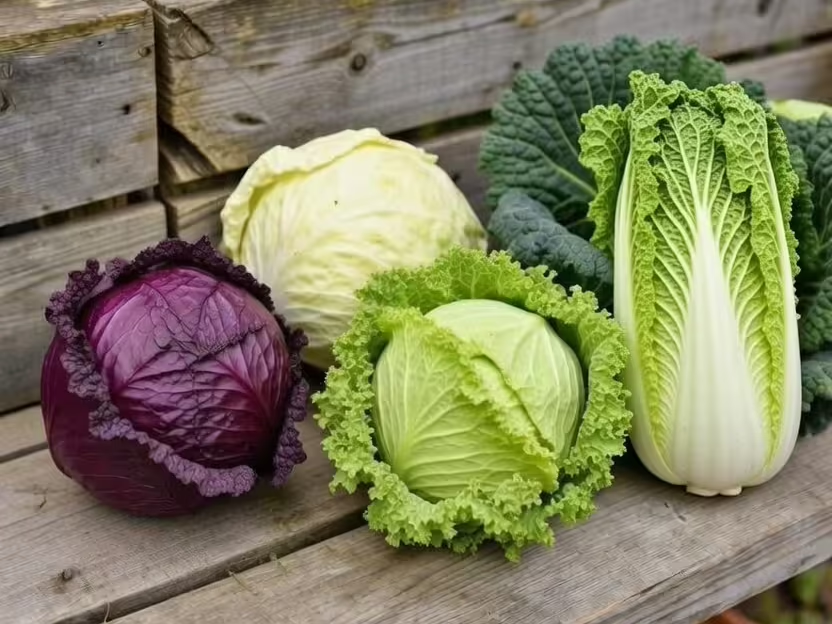
Some cabbage is simply more bitter than others. Savoy, red cabbage, and late-season storage cabbage contain higher concentrations of glucosinolates — sulfur compounds that break down during fermentation into bitter-tasting byproducts. If the raw leaf tasted sharp before you shredded it, the fermented result will be more so.
Fix: There’s limited recourse for the current batch — rinsing helps marginally, but cooking it into soups, potato dishes, or slow braises does the most work. For future batches, use fresh green cabbage in season and taste a raw leaf first. Bitter raw cabbage is a reliable warning.
Temperature Problems
Fermentation temperature affects which bacteria dominate and how quickly. High ambient temperatures (above 75°F / 24°C) accelerate fermentation and favor bacteria that produce more acetic acid and off-flavors. Fluctuating temperatures — warm days, cool nights — can cause inconsistent bacterial succession, where the ferment jumps stages or stalls, leading to unbalanced flavor.
Fix: For the current batch, rapid changes can’t be undone, but moving the jar to a stable, cooler spot and refrigerating once the flavor develops helps. Ideal fermentation temperature is 65–72°F (18–22°C). Avoid placing fermentation jars near ovens, sunny windows, or heating vents.
It’s not always your fault
Cabbage naturally contains bitter compounds called glucosinolates. Their concentration varies by variety and growing conditions, which is why two batches made the same way can taste completely different.
Oxidation (Kraut Above the Brine)
When cabbage rises above the brine it becomes exposed to oxygen. Oxygen triggers enzymatic reactions that produce harsh, bitter flavors — especially along the surface layer. This happens quietly, mid-ferment, without any visible sign of spoilage.
Fix: Check submersion every day or two during active fermentation. If the top layer has been exposed, remove it and taste what’s underneath — the kraut below the brine line is usually fine. Going forward, use a weight or zip-lock bag filled with brine to keep everything submerged.
Old School Tip: Bitterness concentrated at the top of the jar with normal flavor below is almost always an oxidation problem, not a fermentation failure.
How to Fix Bitter Sauerkraut
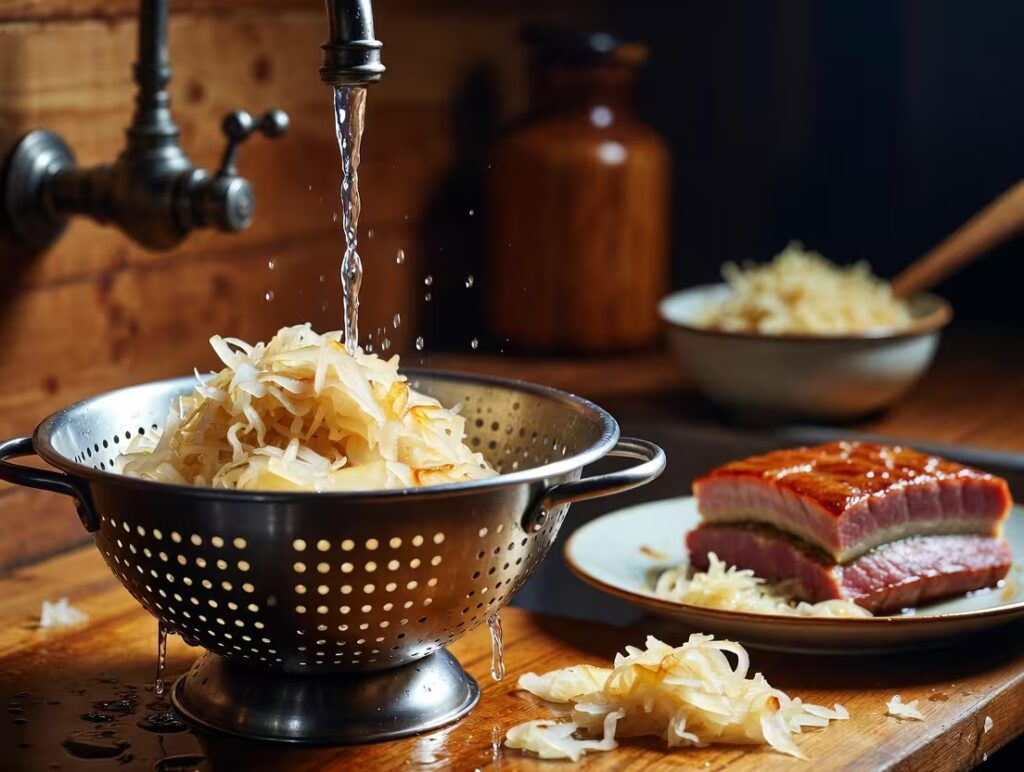
A bitter batch isn’t wasted. Several approaches work well:
- Rinse before serving – A quick cold rinse cuts surface acidity and reduces the intensity of bitterness without eliminating the fermented character entirely.
- Pair with fat – Butter, olive oil, lard, or fatty cuts of meat interrupt bitter perception. Sauerkraut braised with pork shoulder or stirred into potato soup loses most of its harsh edge.
- Cook it – Heat transforms bitter sauerkraut more than any other intervention. Cooked into dishes, it contributes tang and depth without the raw bitterness.
- Blend with fresh cabbage – If you have more fresh cabbage, mixing the bitter kraut into a new batch dilutes the bitterness while jump-starting fermentation with an established culture.
Preventing Bitterness in Future Batches
Four variables cover most cases: fresh green cabbage, accurate salt by weight, consistent cool temperature, and cabbage kept submerged throughout. Taste from day 7 onward and refrigerate at the right moment. Those habits eliminate most causes before they start.
If your batches consistently come out wrong in ways that go beyond bitterness, What’s Wrong With My Sauerkraut is a broader diagnostic post covering texture, color, and smell alongside flavor. And if the problem is the opposite — flat or barely sour — Why Your Sauerkraut Isn’t Sour covers that path.
FAQ
Is bitter sauerkraut safe to eat?
Usually yes. Bitterness on its own is a flavor problem, not a safety problem. If the smell is off, there’s visible mold, or the texture has gone slimy, discard it. Bitterness alone is not a reason to throw a batch out.
How do I make sauerkraut less bitter?
Rinse it under cold water before serving — this pulls out some of the bitter compounds without stripping all the flavor. Pairing it with something fatty like pork or sausage also mellows the bite considerably.
Can you fix bitter sauerkraut once it’s made?
You can’t reverse the fermentation, but you can make the batch usable. Rinsing, cooking it into dishes, or pairing it with fat are your best options. For next time, ferment at a cooler temperature, pull it earlier, and taste as you go.