
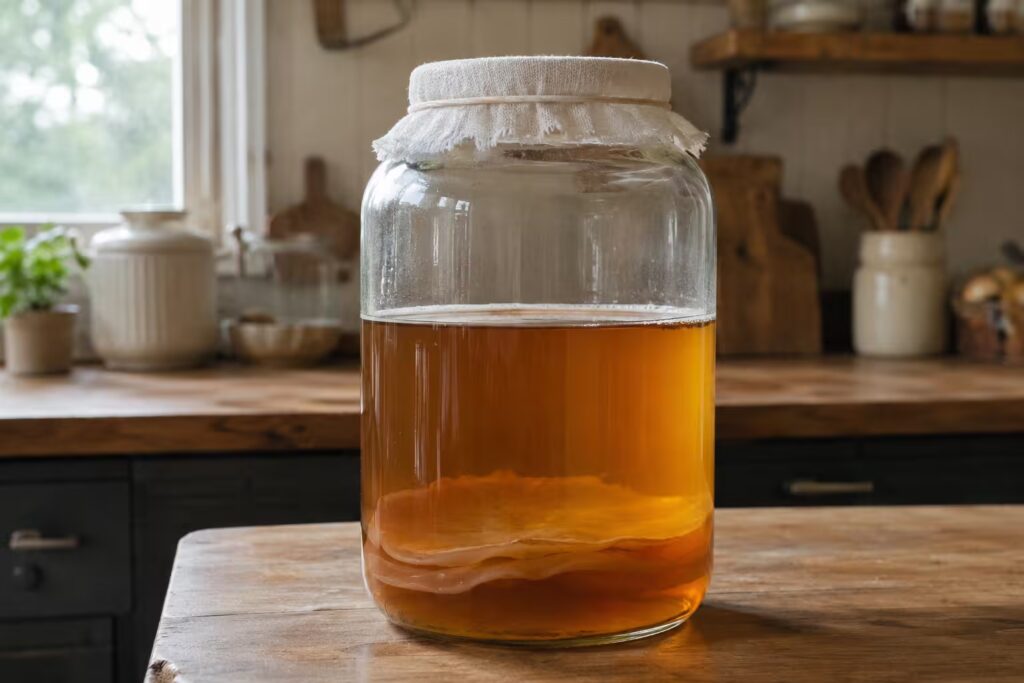
Is It Normal for a SCOBY to Sink?
Yes. A sinking SCOBY is normal, and in most cases it means nothing is wrong with the batch.
Your SCOBY does not need to float in order to ferment kombucha. What most home brewers call the SCOBY is the rubbery pellicle, which is only the visible cellulose layer. The living culture also exists throughout the starter liquid. That is why kombucha can ferment whether the pellicle floats at the top, hangs in the middle, tilts sideways, or rests on the bottom of the jar.
The position of the SCOBY is much less important than the smell, flavor, acidity, and surface condition of the brew. If the kombucha smells clean and tart, shows normal fermentation signs, and has no fuzzy mold, a sunken SCOBY is usually not worth worrying about.
For the full explanation of what the SCOBY actually is, read What Is a Kombucha SCOBY and What Does It Do?.
 Old School Tip: A SCOBY’s job is not to perform at the surface like a floating lid. The culture is active in the liquid too. Judge the batch by fermentation, not by whether the pellicle is sitting where you expected it to sit.
Why SCOBYs Move Around (And Why That’s Expected)
What most brewers call a SCOBY is a cellulose pellicle produced by the bacteria in the culture. It is porous, flexible, and affected by the density of the liquid, trapped gas, temperature, sugar concentration, and how active the fermentation is.
None of those things are automatically problems. They are just normal fermentation behavior.
Temperature
Temperature affects liquid density and fermentation speed. If the brewing spot gets cooler, the liquid changes and fermentation slows. That can cause the SCOBY to sink, shift, or stop rising as actively.
Cold temperatures also reduce yeast activity, which means less carbon dioxide is produced. Since gas bubbles can lift the SCOBY toward the surface, a cooler batch may leave the SCOBY lower in the jar.
Kombucha ferments best around 75 to 80°F, with a practical working range of about 68 to 85°F. If the room is cold and the batch is also staying sweet for a long time, temperature is worth checking. For the full breakdown, read Best Temperature for Kombucha Fermentation.
Carbonation and Gas Bubbles
As fermentation gets going, yeast produce carbon dioxide. Small bubbles can attach to the SCOBY and lift it upward. When the batch is less active, colder, or early in fermentation, there may be fewer bubbles and less lift.
This is one reason a SCOBY can float at first and sink later. The amount of gas in the jar changes as fermentation moves along. The SCOBY follows the conditions in the liquid.
A lack of strong bubbling during first fermentation is not automatically a problem either. First fermentation is covered with cloth, so most carbon dioxide escapes. Strong fizz usually comes later during second fermentation in sealed bottles. If bottled kombucha is the issue, read Flat Kombucha? Why It’s Not Fizzy.
Tea Density and Sugar Concentration
Fresh sweet tea is denser than finished kombucha because it contains more sugar. At the beginning of a batch, the liquid may be heavier, and the SCOBY may sink straight to the bottom. As fermentation converts sugar into acids, alcohol, and carbon dioxide, the liquid changes.
A SCOBY that sinks on day one may rise later. A SCOBY that floats early may sink later. Both can happen in a healthy batch.
If your SCOBY usually sinks at the beginning and rises around day 5 or 6, that is just the process moving along.
New SCOBY Sinking

A new SCOBY often sinks. This is especially common with a first or second batch.
A SCOBY from a supplier or another brewer may have been stored in different tea, different starter liquid, or different temperature conditions. It may also have been sealed in a bag for shipping or storage. When it goes into fresh sweet tea, the density of the new liquid may be different from what it was used to.
That does not mean the culture is weak or dead. Give it time. Add the SCOBY and starter liquid, cover the jar, and leave it alone. Start checking around day 5 to 7 by smell and taste, not by SCOBY position.
If the liquid is slowly becoming tart and smells clean, fermentation is underway.
Old SCOBY Sinking
An established SCOBY can also sink, even if it usually floats. This often happens because something in the brewing conditions changed.
Common reasons include:
- The brewing spot got cooler
- The tea type or brand changed
- The sugar ratio changed
- The SCOBY grew thicker and heavier
- Fermentation activity slowed
- The batch was disturbed or moved
A thick SCOBY is not automatically better, and a sinking SCOBY is not automatically worse. Older pellicles can become dense and heavy over time. If the brew still smells right, tastes right, and continues acidifying, there is usually nothing to correct.
SCOBY Floating Sideways or on an Angle
A SCOBY does not have to float flat. It may tilt, fold, curl, or sit at an angle. Pellicles grow to fit the shape of the jar and shift as gas bubbles, liquid density, and fermentation activity change.
A sideways SCOBY still ferments the batch. A new layer will usually form across the surface even if the older SCOBY is tilted underneath. The surface is where oxygen is available, so new growth tends to appear there regardless of where the old pellicle rests.
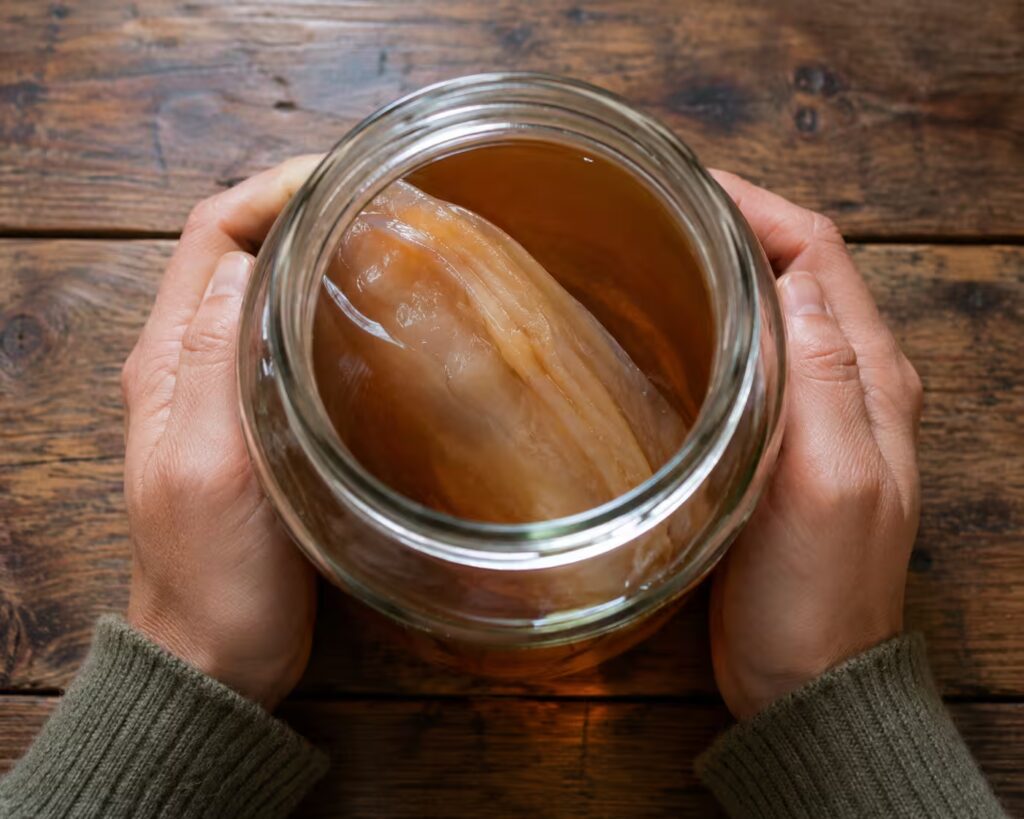
SCOBY Hanging in the Middle
A SCOBY hanging in the middle of the jar is also normal. It usually means the density of the SCOBY and the liquid are close enough that it is suspended rather than rising or sinking.
This can happen mid-fermentation, especially when carbon dioxide activity is steady and sugar has only been partly converted. There is nothing to fix.
SCOBY Floated, Then Sank
A SCOBY that floated at first and then sank is one of the most common beginner concerns. It is also one of the least concerning.
This can happen because:
- Gas bubbles lifted it early
- Carbon dioxide later escaped
- The SCOBY absorbed more liquid
- Sugar levels changed as fermentation progressed
- Temperature shifted
- The pellicle became heavier
Check the kombucha by smell and taste. If it is becoming tart and smells like normal kombucha, the sinking SCOBY is not a problem.e end of the batch is often the same batch that started with a floating SCOBY. Check your brew by smell and taste, not by SCOBY position.
Does Fermentation Still Work if the SCOBY Sinks?
Yes. Fermentation still works if the SCOBY sinks.
The pellicle is only one visible part of the culture. The active bacteria and yeast also live throughout the starter liquid. That is why strong starter liquid is so important. It carries the culture into the new batch even if the SCOBY sinks to the bottom and stays there.
A new pellicle will usually form at the surface of the liquid during fermentation. That can happen even when the older SCOBY is resting on the bottom of the jar.
If you are new to the process, How to Make Kombucha for the First Time walks through the full first batch from sweet tea to finished kombucha.
When a Sinking SCOBY Is Actually Worth Watching
Most of the time, a sinking SCOBY requires no action. The real question is not where the SCOBY is sitting. The real question is whether the batch looks, smells, and ferments normally.
Signs of a Healthy SCOBY, Even a Sunken One
A healthy SCOBY may show:
- Beige, tan, cream, or light brown color
- Slightly rubbery texture
- Brown yeast strands hanging from it
- Tea-stained streaks or darker patches
- Clean tart smell
- Normal acidity developing in the liquid
Brown strings are usually yeast. They are normal and often appear in active kombucha. Surface growth can be confusing, though, so compare anything suspicious with White Stuff on Kombucha?.
Signs That Need Attention
The main thing to watch for is mold. Mold usually appears on the surface where oxygen is present, not as wet brown strands submerged in the liquid.
Mold may look like:
- Fuzzy patches
- Dry raised growth
- Green, black, blue, pink, or powdery white spots
- Growth sitting on the exposed surface of the liquid or pellicle
Brown patches, dark streaks, and stringy material under the liquid are usually yeast deposits, not mold. Mold looks dry and fuzzy. Normal SCOBY growth looks wet, smooth, cloudy, jelly-like, or stringy.
 Take Heed: If you see genuine fuzzy mold on kombucha, discard the entire batch. Do not scrape it off. Do not taste the liquid. Do not save the SCOBY. Clean the vessel thoroughly and restart with fresh active starter liquid.
For broader safety context, read Can You Get Botulism From Kombucha?.Y and the liquid, clean the vessel thoroughly, and start fresh. For a detailed visual comparison, see Kombucha Mold vs Normal SCOBY Growth.
What Not to Do When Your SCOBY Sinks
- A sinking SCOBY does not need rescue. Most attempts to fix it only disturb the batch.
- Do not open the jar repeatedly to check on it. Lifting the cover over and over introduces more opportunity for dust, fruit flies, and mold spores to enter.
- Do not push the SCOBY back to the top. That can disturb the new pellicle forming at the surface and introduces unnecessary handling.
- Do not add extra sugar mid-batch to make the SCOBY float. That changes the fermentation balance and can make the finished kombucha harder to judge.
- Do not move the jar around trying to make the SCOBY rise. Temperature swings and handling can slow fermentation.
- Do not throw out the batch just because the SCOBY sank. Taste around day 7. Let the liquid tell you how the fermentation is going.
Old School Tip: The correct response to a sinking SCOBY is usually boring: leave the jar alone, keep the temperature steady, and taste when the batch reaches the normal tasting window.
Quick Troubleshooting Chart
| What You See | What It Usually Means | What To Do |
|---|---|---|
| SCOBY sank on day one | Normal density shift in fresh sweet tea | Leave it alone |
| SCOBY floating sideways | Normal position change | Do nothing |
| SCOBY hanging in middle | Balanced density and gas activity | Do nothing |
| SCOBY floated then sank | Gas, temperature, or liquid density changed | Judge by taste and smell |
| New pellicle forming on top while old SCOBY sank | Normal fermentation | Keep going |
| Brown strings hanging from SCOBY | Yeast strands | Normal |
| Fuzzy colored surface growth | Mold | Discard batch |
| Still sweet after 10 days | Often too cold or weak starter | Check temperature and starter strength |
If sweetness is the main issue, read Why Is My Kombucha Still Sweet?. If timing is confusing, read How Long Does Kombucha Take to Ferment?.
FAQ
My SCOBY sank on day one. Should I start over?
No. A first-day sink is extremely common, especially with new SCOBYs or at the start of a batch when the sweet tea is at its densest. Leave it and check in 5–7 days.
Will a new SCOBY form even if the old one sank?
Yes. New SCOBY layers form at the surface of the liquid regardless of where the old pellicle is. By the end of your batch, you’ll likely see a thin new SCOBY growing at the top.
My SCOBY is at the bottom and it’s day 10. Is the brew ruined?
Taste it. If it’s tart, slightly effervescent, and smells like kombucha — it’s fine. The SCOBY’s position didn’t affect the outcome.
What if the SCOBY is brown and sitting at the bottom?
Brown coloration on a SCOBY is normal, especially in older cultures or darker teas. Brown stringy bits hanging from the SCOBY are yeast — harmless and actually a sign of an active culture.
The SCOBY floated when I first added it, then sank after 3 days. Why?
Initial carbonation from the starter liquid likely gave it a temporary lift. As the CO2 dissipated and the new batch settled into fermentation, the SCOBY followed the liquid down. This is a normal progression.
Should I remove the old SCOBY if it sinks?
Not necessary. Many brewers remove the oldest SCOBY layer periodically to keep the hotel from getting too thick, but there’s no reason to remove a SCOBY simply because it sank.
Wrapping Up
A sinking SCOBY is normal. It can happen on day one, halfway through fermentation, near the end of the batch, or after a change in tea, sugar, temperature, or culture condition. The pellicle does not need to float for kombucha to ferment.
The active culture lives throughout the starter liquid. That is why a batch can keep acidifying even when the visible SCOBY is at the bottom of the jar. Watch the signs that actually matter: clean tart smell, gradual flavor change, acidity, normal yeast strands, and no fuzzy mold.
Do not poke, stir, rescue, or throw away a batch just because the SCOBY sank. Keep the jar covered, keep the temperature steady, and taste in the normal window. Most of the time, the brew is doing exactly what it should.