

Kombucha that tastes sharply sour usually fermented too long, too warm, or with too much starter tea. In most cases, this is a flavor problem, not a safety problem. The batch kept doing what kombucha naturally does during first fermentation: the yeast and bacteria continued working until the sweetness faded and the acids took over.
A good finished kombucha should have balance. It should taste tart, lightly sweet, and clean rather than harsh. When that balance disappears, the brew can taste more like vinegar than a drink. That does not automatically mean the batch is contaminated. It usually means the fermentation window passed before the kombucha was bottled, refrigerated, or used.
The first step is separating over fermented kombucha from spoiled kombucha. Sour kombucha can often be diluted, flavored, used as strong starter tea, or turned into kombucha vinegar. Moldy or foul smelling kombucha should be discarded.
Why Kombucha Gets Too Sour
Kombucha becomes more acidic as fermentation continues. Early in the process, sweet tea begins shifting toward tart fermented tea. In the ideal drinking window, some sweetness remains and the acidity feels bright rather than harsh. If the same batch continues sitting at room temperature, the bacteria keep producing acids until the flavor becomes sharp, flat, and vinegary.
Many sour batches come from treating fermentation timelines as fixed schedules. A recipe may say 7 to 10 days, but kombucha does not follow the calendar by itself. Temperature, starter strength, sugar levels, culture activity, and batch size all affect how quickly the brew reaches its peak. A batch that tastes balanced on day 9 in spring may taste too sour on day 6 in summer.
This is why regular tasting matters. Kombucha is done when the flavor is right, not when a recipe says the number of days has passed. For normal timing ranges, read How Long Does Kombucha Take to Ferment?.
You Let It Ferment Too Long
The most common reason kombucha gets too sour is simple: the batch stayed at room temperature too long. This can happen when the jar is forgotten, when the brewer waits for the longest suggested fermentation time, or when tasting starts too late.
Once kombucha reaches the flavor window, it should be bottled, refrigerated, or used as starter for the next batch. If it remains at room temperature, fermentation continues. The sugars keep dropping, acids keep rising, and the flavor moves from pleasant tartness toward vinegar.
 Old School Tip: Most sour kombucha is not a failed batch. It is finished kombucha that stayed at room temperature longer than the flavor window allowed.
A batch that is only a few days past its ideal point may still be drinkable with dilution or flavoring. A batch that has gone weeks too long may be better treated as kombucha vinegar or strong starter liquid.
Your Brewing Space Was Warmer Than You Realized
Warmth speeds fermentation. A batch that behaves predictably in cool weather can turn sour quickly when the kitchen warms up. This is common in summer, in sunny kitchens, near appliances, or in rooms that heat up during the afternoon.
Kombucha ferments best around 75 to 80°F. Above that range, acidity can build quickly. A batch that normally takes 9 or 10 days may be ready in 5 or 6 days when the brewing area is warm. If the schedule does not change with the temperature, sour batches are likely.
Temperature problems are often mistaken for culture problems. The SCOBY may be healthy and active, but the batch is simply moving faster than expected. For a fuller explanation, read Best Temperature for Kombucha Fermentation.
You Used Too Much Starter Tea
Starter tea is important because it acidifies the fresh sweet tea and brings active culture into the batch. It helps protect the brew early and gets fermentation moving. More starter tea, however, is not always better.
Using too much starter tea makes the batch acidic from the beginning. That can shorten the flavor window and cause the kombucha to taste sour sooner than expected. A normal beginner ratio is about 2 cups of starter liquid per gallon, or roughly 10 to 15 percent of the total batch volume.
Strong starter liquid is useful, but it should still be measured. Guessing high can make the batch overly acidic before fermentation has had time to develop a balanced flavor.
Your Sugar Ratio Was Off
Kombucha depends on sugar as fermentation fuel. Too little sugar can leave the batch thin and acidic because there is not enough sweetness to balance the acids. Too much sugar can also create problems by stressing the culture or causing uneven fermentation.
A standard one gallon batch usually uses about 1 cup of plain white cane sugar. That ratio gives the yeast enough food without overwhelming the culture. It also leaves the brewer with a predictable starting point for timing and flavor.
Sugar choice also matters. Alternative sugars can ferment unpredictably and make troubleshooting harder. For a full breakdown, read Best Sugar for Kombucha.
Is Sour Kombucha Still Safe to Drink?
Sour kombucha is usually safe if it looks normal, smells sharply acidic rather than rotten, and has no signs of mold. Over fermented kombucha is generally a flavor issue. It may be too acidic to enjoy as a drink, but acidity itself is part of what makes kombucha stable.
The important distinction is between over fermentation and contamination. Over fermented kombucha smells vinegary, looks normal, and tastes harsher than intended. Contaminated kombucha may have fuzzy mold, strange surface growth, rotten odor, or colors that do not match normal yeast and pellicle formation.
 Take Heed: If fuzzy mold appears on the surface in blue, green, black, pink, or powdery white patches, discard the entire batch. Do not skim it, do not taste it, do not save the SCOBY, and do not reuse the liquid as starter tea.
Brown yeast strands, cloudy liquid, a sour smell, and a darker tea color are not automatically signs of spoilage. If surface growth is unclear, compare it with White Stuff on Kombucha? before making a decision.is usually just overdone. Visible contamination or true spoilage is another category entirely.
Can You Fix Kombucha That Is Too Sour?
Sour kombucha can often be made useful, but fermentation cannot be reversed. Once the acids are present, they cannot be removed from the batch. The practical goal is to rebalance the flavor, use the acidity wisely, or repurpose the batch.
The right fix depends on how sour the kombucha is. Slightly too tart kombucha can often be diluted or flavored. Strongly vinegary kombucha is usually better used as starter liquid or vinegar.
Dilute It With Fresh Sweet Tea
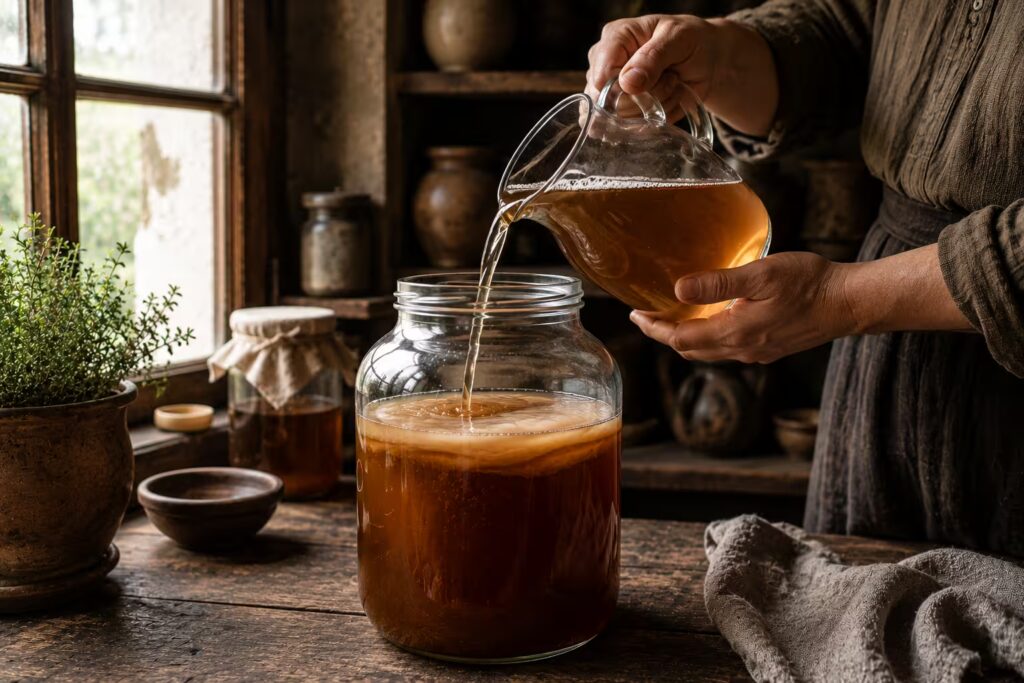
Diluting sour kombucha with fresh sweet tea is usually the best fix when the batch is too tart but not fully vinegary. Brew fresh sweet tea, cool it completely, and blend it gradually into the sour kombucha until the flavor becomes more balanced.
This works because the sweet tea restores some body and sweetness while reducing the sharpness of the acids. The tea must be completely cool before mixing, especially if the SCOBY or starter liquid will be reused. Hot tea can damage the culture.
Old School Tip: Dilution does not undo fermentation. It rebalances the finished drink. Add slowly and taste as the flavor changes.
Once diluted, the kombucha can be refrigerated for drinking or moved into second fermentation if the flavor is pleasant enough.
Improve It Through Second Fermentation
Some overly acidic kombucha becomes more drinkable after second fermentation, especially when paired with strong flavors. Ginger, berries, citrus, apple, and juice can soften the sharpness and add enough sweetness to make the batch more balanced.
This works best when the kombucha is only somewhat too sour. If it already tastes like strong vinegar, second fermentation will not turn it back into a pleasant drinking kombucha. It may still carbonate, but the base flavor will remain harsh.
Flavoring choices and amounts are covered in How to Flavor Kombucha. If the goal is carbonation, bottle choice and timing matter too. Read How to Bottle Kombucha the Right Way before sealing sour kombucha in bottles.
Dilute It at Serving Time
If the kombucha is only slightly too sharp, dilution at serving time may be enough. Sparkling water, still water, juice, tea, or lemonade can all soften the acidity without requiring the whole batch to be adjusted.
This is the easiest fix when the kombucha is drinkable but too intense. It also avoids restarting fermentation or changing the storage plan. Keep the sour kombucha refrigerated and dilute each glass as needed.
Turn It Into Kombucha Vinegar

At some point, saving the batch as a beverage stops making sense. If the kombucha tastes decisively like vinegar, use it as vinegar. Over fermented kombucha works well in vinaigrettes, marinades, sauces, shrubs, and anywhere a mild fermented vinegar flavor makes sense.
Kombucha vinegar can also be used as strong starter liquid for future batches, as long as it is not moldy or foul. Because it is very acidic, use it carefully. Too much strong starter can make the next batch sour too quickly.
When to Start Over Instead
Not every sour batch is worth saving. Mold is the obvious stopping point. Fuzzy colored growth means the batch should be discarded. A rotten or putrid smell is another hard stop. Kombucha should smell tart, acidic, vinegary, or fermented. It should not smell like rot.
A batch left warm and forgotten for months should be judged more carefully than one that simply overshot by a few days. If the SCOBY has dried out, the surface looks suspicious, the smell is foul, or the liquid looks contaminated, starting fresh is the better choice.
Old School Tip: Every brewer eventually discards a batch. That is not failure. It is part of learning the difference between normal over fermentation and a batch that should not be trusted.
How to Prevent Kombucha From Getting Too Sour
The best way to prevent sour kombucha is to taste earlier and keep the brewing conditions consistent. Waiting until the end of a recipe’s suggested timeline is risky, especially in warm weather. A batch can move from balanced to too sour in only a day or two once fermentation is active.
Start tasting around day 7 in average room temperatures, and earlier if the brewing area is warm. In hot kitchens, day 5 or 6 may be more appropriate. In cooler kitchens, the batch may need more time. The schedule should follow the temperature, not the other way around.
Keep the jar in one stable location. Moving kombucha between counters, cabinets, sunny spots, and warm corners makes timing harder to predict. A steady brewing spot produces more consistent results.
Use disciplined starter ratios. More starter liquid is not automatically safer or better. For a standard gallon batch, about 2 cups of strong finished kombucha is usually enough. Keep notes on batch date, temperature, starter amount, and first tasting date. After a few batches, the pattern becomes obvious.
Once the kombucha tastes right, refrigerate it, bottle it, or reserve starter liquid and move on. Finished kombucha left at room temperature keeps changing whether that was intended or not. If bottled kombucha keeps coming out flat after long first fermentations, the batch may be running out of sugar before second fermentation. That problem is covered in Flat Kombucha? Why It’s Not Fizzy.
FAQ
Wrapping Up
Kombucha that turns too sour usually fermented too long, too warm, or with too much starter liquid. In most cases, the batch is over fermented rather than spoiled. Sharp vinegar flavor is frustrating, but it is also useful information about timing, temperature, and starter strength.
Slightly sour kombucha can often be diluted, flavored, or softened at serving time. Strongly sour kombucha can be used as vinegar or saved as starter liquid for future batches. Mold, rotten odor, or suspicious surface growth means the batch should be discarded.
The long term fix is simple: taste earlier, keep temperature stable, measure starter liquid, and refrigerate or bottle the batch once the flavor is right. For the full brewing process, start with How to Make Kombucha for the First Time.