
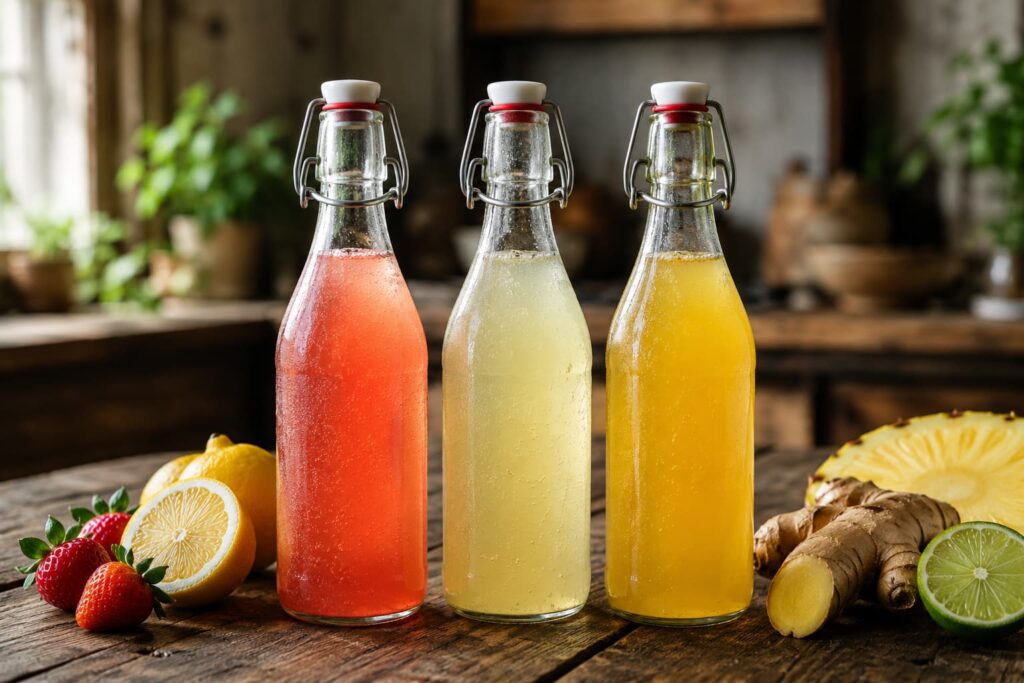
Most probiotic-style sodas are expensive for what they are: flavored liquid, carbonation, and a carefully marketed gut-health claim. Homemade lacto soda is different. It is made by fermentation, develops its own tartness, and carbonates naturally in the bottle.
It is also inexpensive. Fruit, sugar, water, and an active starter are enough to make a batch.
The tradeoff is that homemade soda is less predictable than anything from a factory. The flavor changes as it ferments, carbonation can build quickly, and the finished drink may contain a small amount of alcohol. You need to watch the batch instead of blindly following a clock.
If you are new to fermentation, read Fermenting Food at Home: The Ultimate Beginner’s Guide first. The same basic habits—clean equipment, healthy ingredients, sensible temperatures, and attention to smell and appearance—apply here.
What Is Lacto Soda?
Lacto soda is a loosely used name for a naturally fermented soft drink. A sweet liquid is inoculated with an active culture and left at room temperature long enough for microorganisms to consume some of the sugar and produce acid, aroma, and carbon dioxide.
The word lacto refers to lactic acid, not lactose. A lacto-fermented drink does not necessarily contain milk. However, the name is not scientifically precise: depending on the starter and ingredients, both lactic-acid bacteria and yeasts may be active. Yeasts are especially important for carbonation and can also produce a small amount of alcohol.
That means homemade lacto soda should not be advertised as alcohol-free, and it is more accurate to call it a live fermented drink than to promise a measured probiotic benefit.
 Old School Tip: Think of lacto soda as a young ferment, not a shelf-stable soft drink. You are catching it at the point where it tastes bright and has enough carbonation, then slowing it down in the refrigerator.
Homemade Lacto Soda vs. Commercial Probiotic Soda
Homemade lacto soda and commercial probiotic soda are not the same product.
Some store-bought drinks are fermented. Others are ordinary carbonated beverages with prebiotic fiber or a selected probiotic culture added later. Some contain live cultures and some do not. You have to read the label; there is no honest blanket rule.
Homemade lacto soda gives you more control over the fruit, sweetness, flavor, and fermentation time. It also produces a changing mixture of wild or starter-derived microorganisms rather than a standardized dose. That may be appealing, but it does not make the drink medically superior.
Make it because it is flavorful, inexpensive, and interesting—not because anyone promised it would fix your gut.
The Three Best Ways to Make Lacto Soda
There are several ways to start a fermented soda. These three are practical at home, but they do not produce identical results.
1. Whey-Based Lacto Soda
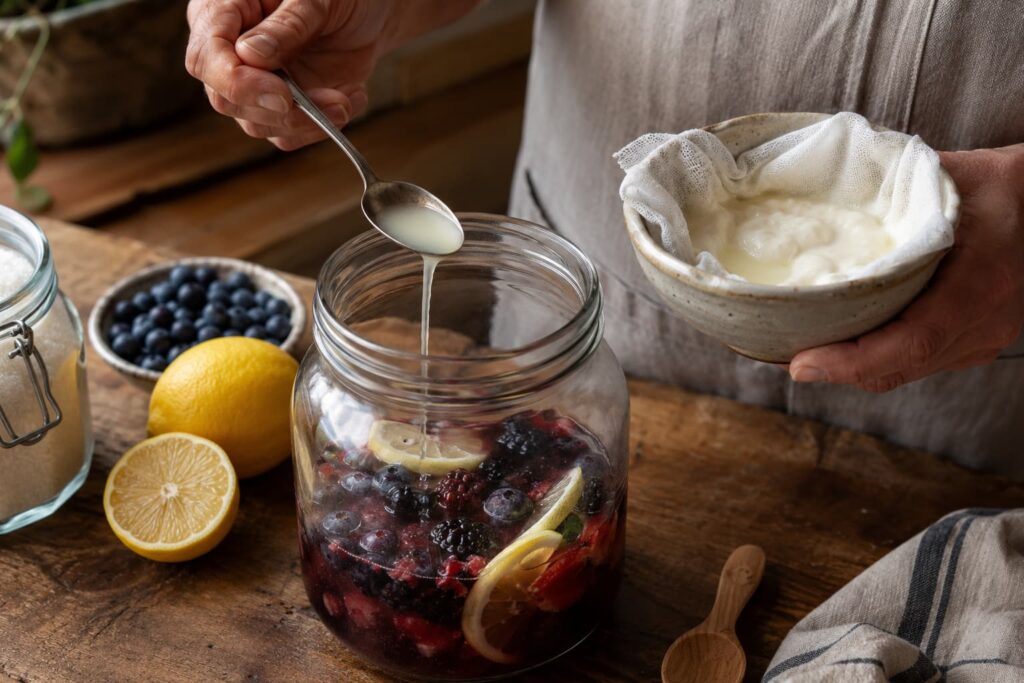
Whey from plain yogurt gives the drink a quick source of lactic-acid bacteria. It tends to produce a mild tang and is the most literally “lacto” of the three methods.
Use fresh liquid whey drained from plain yogurt that contains live cultures. Do not use powdered whey protein.
For one quart, combine:
- 3 cups fruit juice or cooled sweetened fruit tea
- 1/4 cup fresh yogurt whey
- 2 to 4 tablespoons sugar, depending on the sweetness of the base
- Enough non-chlorinated water to make 1 quart
Stir the mixture in a clean jar, cover it with a lid, and ferment at room temperature for 12 to 48 hours. When it tastes lightly tart and shows some activity, strain if necessary, bottle it, and move to the carbonation step below.
Whey can leave a faint dairy aroma or cloudy sediment. That is normal. This method is not dairy-free.
2. Ginger Bug Soda
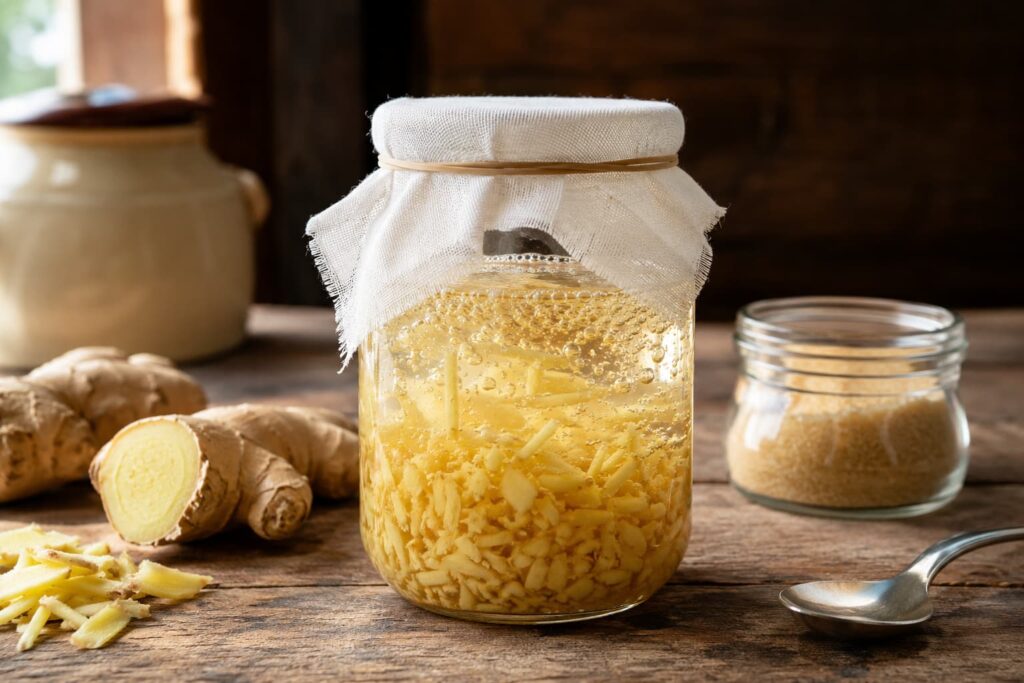
A ginger bug is a wild starter maintained with fresh ginger, sugar, and water. It contains a mixed community of yeasts and bacteria and usually gives the strongest, most soda-like carbonation.
For one quart, combine:
- 3 cups fruit juice, sweetened herbal tea, or flavored sugar water
- 1/4 cup strained, active ginger bug liquid
- 2 to 4 tablespoons sugar if the base is not already sweet
- Enough non-chlorinated water to make 1 quart
Stir, cover, and ferment at room temperature for 12 to 48 hours. A healthy batch should begin to smell fruity, gingery, yeasty, or lightly tart. Once it shows activity, strain it and bottle for carbonation.
This is the best method if your main goal is reliable fizz. It can also produce more alcohol than a primarily lactic whey ferment, especially if you leave it warm for several days.
3. Water-Kefir Soda
Water kefir grains provide another mixed culture of bacteria and yeasts. This method is dairy-free and more repeatable than relying on microorganisms carried by a piece of fruit.
First, make a plain batch of water kefir according to the instructions supplied with your grains. Strain out the grains. Then add fruit juice, chopped fruit, herbs, or spices to the finished water kefir and let it ferment in a closed bottle for 12 to 36 hours before refrigerating.
Do not put valuable water kefir grains directly into highly acidic juice unless your culture instructions specifically allow it. Use the finished first ferment as the soda base instead.
Why I Do Not Recommend the Salt-Brine Method for Soda
Salt brine is excellent for vegetables and some fruit ferments, but it is not the best general method for making soda. Enough salt to guide a vegetable ferment can make a beverage taste more like pickle brine than soft drink, while too little salt may not provide the same selective protection.
If you want to ferment pineapple peels into tepache or make another traditional fruit ferment, use a recipe written for that specific drink. Do not improvise by taking the salt ratio from a vegetable ferment and calling the result soda. How Much Salt for Fermenting Vegetables (The Simple Ratio Guide) explains why salt ratios matter in their proper context.
How Much Sugar Does Lacto Soda Need?
There is no universal minimum of 1/4 cup sugar per quart. The correct amount depends on the natural sugar in the fruit or juice, the starter, the temperature, and how sweet you want the finished drink.
For a low-sugar base such as herbal tea or flavored water, start with about 1/4 cup sugar per quart. For sweet fruit juice, 2 tablespoons of added sugar may be enough, and some juices need no additional sugar at all.
The culture consumes only part of that sugar during a short soda ferment. Homemade lacto soda is not automatically low-sugar.
Old School Tip: Taste the liquid before fermentation. It should be a little sweeter than you want the final soda because fermentation will reduce the sweetness and add acidity.
How to Bottle and Carbonate Lacto Soda Safely
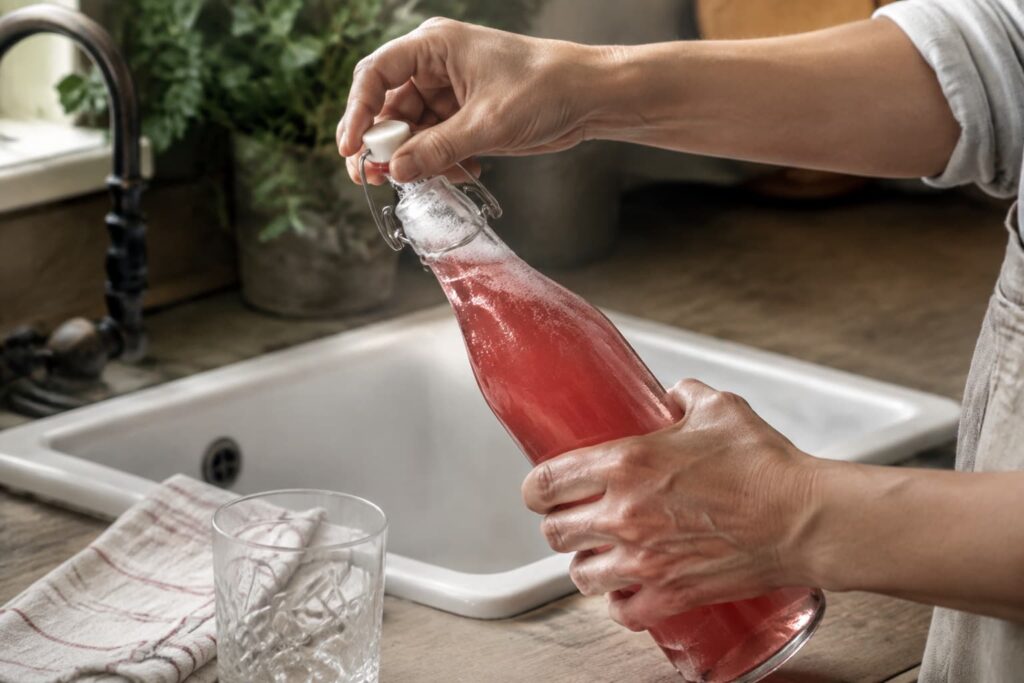
Once the first ferment tastes pleasantly tart and shows activity, strain out fruit pulp, ginger, and herbs. Transfer the soda into clean bottles rated for carbonated drinks, leaving about 1 to 2 inches of headspace.
For beginners, reusable plastic soda bottles are safer and easier to judge than decorative glass bottles. Squeeze the bottle when you fill it. When it becomes firm and no longer dents easily, carbonation has built up and the soda should go into the refrigerator.
At normal room temperature, this may take 12 to 48 hours. Warm rooms, sugary juice, and an aggressive ginger bug can make it happen faster.
 Take Heed: Fermentation creates pressure. Do not use square glass bottles, thin decorative bottles, ordinary jars, or damaged bottles for sealed carbonation. They can crack or explode. Refrigerate the soda as soon as it is carbonated, chill it thoroughly before opening, and open it slowly over a sink.
The general principles in When and How to Burp Your Ferments apply, but burping every bottle on a rigid schedule also releases the carbonation you are trying to keep. PET soda bottles give you a simple pressure gauge without repeatedly opening the drink.
Flavor Ideas
Start with familiar combinations and avoid packing bottles with lots of fruit pulp. Pulp can create extra nucleation points, vigorous foaming, and unpredictable pressure.
- Strawberry and lemon
- Blueberry and mint
- Apple and cinnamon
- Mango and chili
- Pineapple and vanilla
- Ginger and lime
- Cucumber and melon
- Blackberry and sage
Use whole spices lightly. Ground spices are difficult to strain and can make the soda gush when opened.
How to Tell When Lacto Soda Is Ready
Ready soda should smell clean and appealing. Depending on the ingredients and starter, the aroma may be fruity, gingery, lightly yeasty, or pleasantly sour. The flavor should have shifted from flat sweetness toward a brighter balance of sweet and tart.
Visible bubbles are helpful but not mandatory during the first ferment. Ferment Not Bubbling: Is It Dead? What It Really Means explains why a ferment can be active even when the jar is not putting on a show.
Once bottled, pressure is the practical signal. A firm plastic bottle means it is time to refrigerate.
Old School Tip: Do not chase maximum carbonation. The best stopping point is usually one step before the bottle seems impressively hard. Cold liquid holds carbonation better, and another day on the counter can turn a lively soda into a mess.
When to Throw It Out
Normal fermented soda can be cloudy, contain sediment, or smell lightly yeasty. Those traits alone do not mean it is spoiled. Why Fermented Foods Smell Sour (And When That Smell Is a Problem) will help you separate normal acidity from a genuinely bad odor.
Discard the batch if you see fuzzy mold, colored growth on the surface, ropy or unexpectedly slimy liquid, or if it smells putrid rather than tart or yeasty. Do not taste a visibly moldy ferment. For help identifying surface growth, see Mold in Fermentation: How to Spot It, Fix It, and Prevent It for Good.
Take Heed: Homemade fermented soda is unpasteurized and its acidity, alcohol, and microbial content are not standardized. Pregnant people, young children, immunocompromised people, and anyone who must strictly avoid alcohol should use extra caution and ask a qualified clinician whether homemade live-culture drinks are appropriate.
Storage
Refrigerate lacto soda as soon as it reaches the carbonation you want. Cold temperatures slow fermentation but do not stop it completely.
For best flavor and pressure control, drink it within one to two weeks. Keep bottles cold, open them slowly, and do not leave a refrigerated batch at room temperature for hours before opening.
If the soda becomes increasingly sour, gushes despite being fully chilled, or continues building heavy pressure in the refrigerator, open it carefully and use it promptly—or discard it if anything smells or looks wrong.
Lacto Soda Troubleshooting
My Soda Is Not Fizzy
The starter may have been weak, the room may be cool, or the base may not contain enough fermentable sugar. Give it another 12 hours, then reassess. If nothing changes, start again with a visibly active culture.
My Soda Is Too Sweet
Let the first ferment continue a little longer before bottling. Do not leave an already hard, sealed bottle warm just to reduce sweetness; release the pressure safely and refrigerate it.
My Soda Is Too Sour
It fermented too long or too warm. Refrigerate it earlier next time. You can serve an overly tart batch over ice or dilute it with sparkling water if it otherwise smells and looks healthy.
My Soda Explodes Out of the Bottle
It was overcarbonated, too warm when opened, or contained too much pulp. Chill it completely, open it outdoors or over a sink, and shorten the sealed room-temperature stage on the next batch.
There Is Sediment at the Bottom
Fine fruit particles, yeast, and culture sediment are common. Pour gently if you prefer to leave it behind.
Is Homemade Lacto Soda Worth Making?
Yes! if you want a cheap, adaptable fermented drink and are willing to pay attention to it.
Whey gives a mild, lactic ferment. A ginger bug usually gives the strongest fizz. Water kefir is a dependable dairy-free option. All three let you make flavors that are difficult to find in a store, and a quart usually costs little more than the fruit and sugar used to make it.
Just keep the promise realistic. Homemade lacto soda is not magic medicine, it is not reliably alcohol-free, and it is not shelf-stable. It is simply a living, changing fermented drink—and that is interesting enough on its own.