
Flat kombucha usually comes down to one of a handful of problems. The good news is that most of them are easy to fix once you know what you’re actually looking at. The bad news is that a lot of the advice floating around online sends people chasing the wrong culprit.
Your SCOBY probably isn’t the issue. Your fermentation process probably isn’t broken. What’s far more likely is a bottle problem, a sugar problem, or a temperature problem and any of those is fixable.
Why Kombucha Gets Fizzy in the First Place
Carbonation isn’t magic. Yeast eat sugar and produce CO2 as a byproduct. When you seal that CO2 inside a bottle with nowhere to go, pressure builds. Pressure is what creates fizz.
During first fermentation, your jar is covered with a breathable cloth. CO2 escapes freely. No carbonation builds — that’s by design. Carbonation only happens during second fermentation, when you seal the kombucha in an airtight bottle with enough residual sugar for the yeast to keep working.
That’s the whole system. Yeast, sugar, sealed container, time. If any one of those pieces is off, you get flat kombucha.
Most Common Reasons Your Kombucha Is Flat
Your Bottles Aren’t Actually Airtight
The number one cause of flat kombucha, and the one people overlook most often.
Swing-top bottles work well — but only if the gasket is in good shape. Gaskets dry out and crack over time. If your flip-tops are more than a year old and you’ve never replaced the gaskets, start there.
Decorative bottles with standard screw caps don’t hold pressure. Neither do repurposed juice or wine bottles. You need purpose-made kombucha bottles, swing-tops with intact gaskets, or good-quality screw-tops.
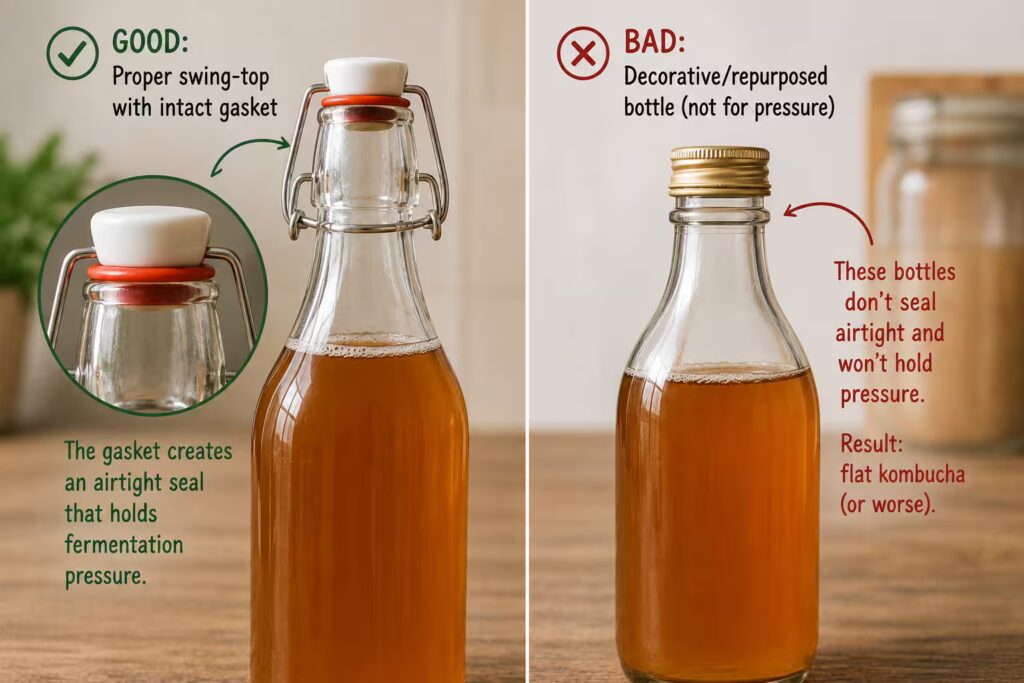
 Old School Tip: Squeeze a plastic bottle after capping — if it gives, it’s not sealed. For glass, listen for a firm pop when you open it. Silence means pressure leaked out.
You Didn’t Leave Enough Sugar
Yeast need fuel. No sugar, no CO2.
This happens most often with over-fermented kombucha — gone so acidic that the yeast have already consumed most of the available sugar. When you bottle that, there’s not enough left to drive carbonation. It also happens when fruit or juice additions are too skimpy. A splash of juice in a 16-oz bottle often isn’t enough.
If your kombucha tastes very sour before bottling, add a small sugar boost — a teaspoon of sugar, honey, or a tablespoon of juice per 16-oz bottle — and give it another 2–3 days before refrigerating.
Your Kitchen Is Too Cold
Below around 65°F (18°C), second fermentation drags — or stalls out almost entirely. If your kitchen drops at night or you’re brewing in winter, slow carbonation is the natural result.
The sweet spot is 70–78°F (21–26°C). Cold kitchens make sluggish kombucha. That’s not a broken culture. It’s just cold.
First Fermentation Went Too Long
Very sour, vinegary kombucha means the sugar is mostly gone and the yeast are winding down. Bottle that and you’re starting with less fuel and a slower culture. Expect weak fizz at best.
Fix it by bottling a little earlier, or add back fermentable sugar at bottling.
Weak Yeast PopulationMost of the yeast in your brew lives in the brown stringy sediment at the bottom of your jar — not in the SCOBY disc. If you’ve been pouring off only the clear liquid and leaving all that sediment behind, you’re filtering out a good chunk of your active yeast.
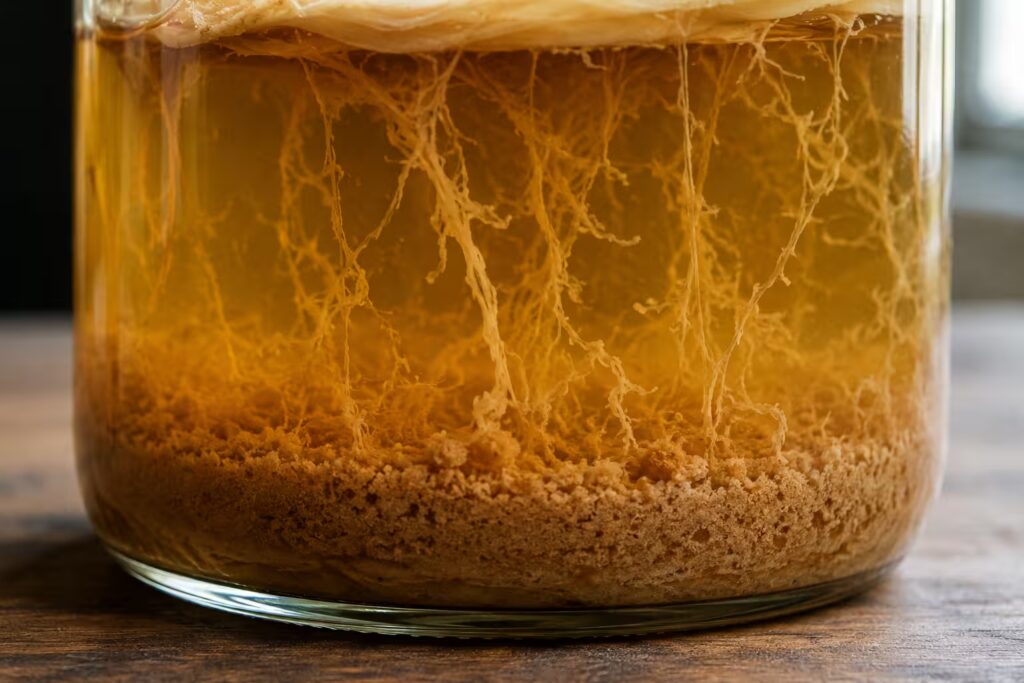
Make sure some of that yeasty sediment makes it into each bottle. You don’t need much.
Old School Tip: When you’re bottling, give the jar a gentle swirl before pouring. That redistribution of yeast sediment can make a noticeable difference in how consistently your bottles carbonate.
You Refrigerated Too Early
Refrigeration doesn’t kill yeast, but it puts them to sleep. Carbonation stops once bottles go cold.
If you’re refrigerating after 24 hours because you’re worried about explosions, you’re pulling the bottles before carbonation has had a chance to develop. Two to three days at room temperature is the baseline. Test a bottle at 48 hours — if there’s no pressure, reseal and wait.
You Kept Opening the Bottles
Burping bottles daily is advice that gets passed around constantly. It’s also counterproductive. Every time you open a bottle, you release the CO2 pressure you’re trying to build.
If you’ve had explosions and want to be cautious, one burp after 3–4 days is fine. But daily burping guarantees flat kombucha. Trust the bottle. Let pressure build. Open it cold.
Old School Tip: If you’re nervous about over-carbonation, use one plastic bottle alongside your glass bottles as a pressure gauge. When the plastic bottle feels firm, your glass bottles are likely well-carbonated. Refrigerate everything.
How to Fix Flat Kombucha
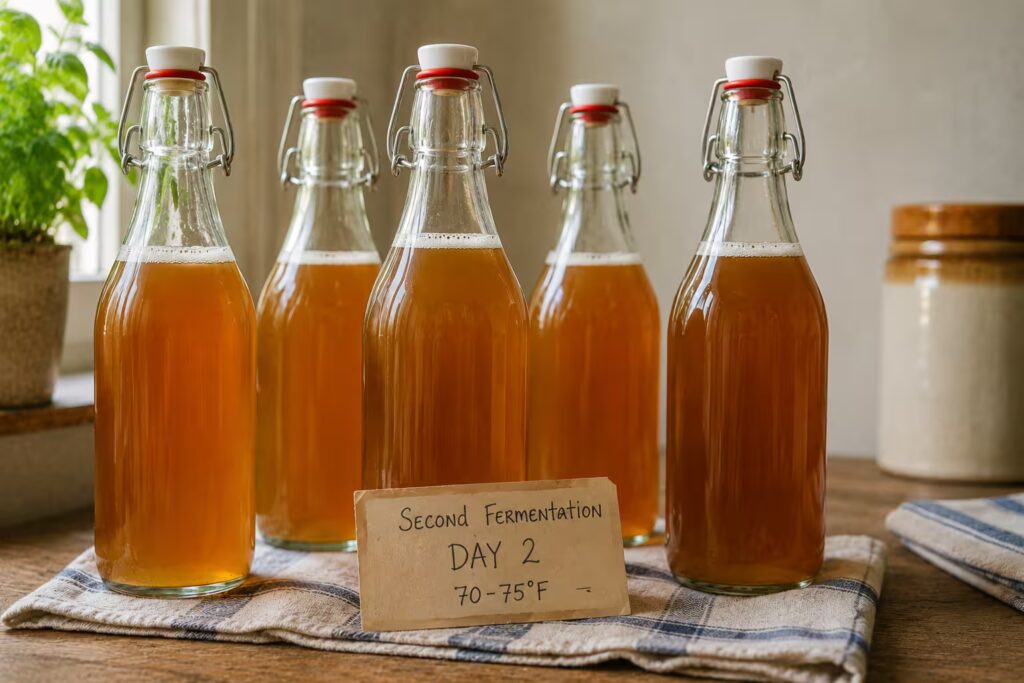
If your bottles are already sealed and sitting: Check the temperature first. If they’re somewhere cool, move them somewhere warmer (70°F+) and give them another 48–72 hours before opening.
If you just opened a flat bottle: You can try resealing it and giving it more time, but once a bottle’s been opened, you’ve released whatever CO2 had built up. Results will be unpredictable.
If the whole batch is flat after proper time: Check your bottles for seal integrity. Replace gaskets if needed. For the next batch, add more fermentable sugar at bottling, confirm your kitchen temperature, and make sure yeast sediment is making it into each bottle.
If your kombucha is very sour: Add a small amount of sugar (½ to 1 teaspoon per 16 oz) directly to each bottle, reseal, and let them sit at room temperature for another 2–3 days. This often rescues a flat but otherwise healthy batch.
Can You Save Flat Kombucha?
Usually, yes — if the kombucha tastes and smells right and the problem was just the process.
Add a sugar source, reseal, and try again. Or just drink it still — flat kombucha isn’t ruined, it’s just not fizzy. What you can’t rescue is a bottle with a seal leak. The CO2 is gone. You’d need to let the yeast produce new CO2, which means time and properly sealed bottles.
When Flat Kombucha Means Another Problem
Flat kombucha is almost always a process issue, not a contamination issue. Those are two different things.
If your kombucha smells off — genuinely unpleasant, not just sour — or you see fuzzy mold growth (dry, raised, circular patches, not the normal wet film of a forming pellicle), that’s a different problem. Contamination doesn’t cause flatness. Flatness doesn’t cause contamination. Don’t conflate them.
If the kombucha tastes and smells right but won’t carbonate, you’re dealing with one of the process issues above. Work through them in order. Something in the list is your answer.
Frequently Asked Questions
Why is my kombucha not fizzy after 3 days? Three days at proper temperature (70–78°F) with adequate sugar should produce noticeable carbonation for most batches. If it hasn’t, check your bottles first — a leaking seal is the most common culprit. Then look at sugar content and yeast presence in the bottle.
Can I add more sugar after bottling? Yes. Open the bottle, add a small amount of sugar, honey, or juice, reseal immediately, and give it another 48–72 hours at room temperature. It won’t build as much pressure as if you’d added it at the start, but it can rescue a sluggish batch.
Does refrigeration stop carbonation? Effectively, yes. Cold temperatures put yeast into dormancy and halt CO2 production. Once you refrigerate, carbonation development stops. Always complete second fermentation at room temperature before refrigerating.
Why is homemade kombucha less fizzy than store-bought kombucha? Commercial kombucha is often force-carbonated — CO2 is injected under pressure rather than produced naturally by yeast. Home-brewed kombucha relies entirely on natural fermentation, which produces less consistent and typically lower carbonation. Proper bottles, adequate sugar, and good yeast health will get you there, but it’s rarely going to match the industrial fizz of commercial brands.
Can dead yeast cause flat kombucha? A severely depleted or stressed yeast population will produce weak carbonation, yes. This can happen if you’ve been stripping out sediment (where most yeast lives), using starter liquid that’s been refrigerated for months, or running very high-acid ferments that stress the culture over time. Add some yeasty sediment to your bottles and give the culture time to recover.