Ginger bugs fail people at predictable points. Day four, the bubbles stop. After a feeding, the jar goes quiet. You check it in the morning and nothing’s happening.
Before you do anything: a quiet ginger bug is often still alive. Don’t restart before day seven unless you see mold or smell something genuinely rotten. Those are the only two reasons to quit early. Everything else is worth troubleshooting first.
Most stalls come down to temperature, water, or sugar not contamination or failure.
Is Your Ginger Bug Actually Dead?
Take one teaspoon of ginger bug liquid and stir it into a small glass of sugar water — about two teaspoons of sugar dissolved in half a cup of filtered water. Cover loosely and leave it at room temperature. Check it in six to eight hours.
Any bubbles at all even small ones along the edges or rising slowly through the liquid — mean your bug is alive. A jar that looks flat on the surface can still hold a working culture. Surface activity and microbial activity are not the same thing.
If nothing happens after twelve hours, you have a real stall. That’s what the rest of this guide is for.
 Old School Tip: Smell the jar before drawing any conclusions. A live ginger bug smells faintly sweet, mildly yeasty, and slightly tangy. Clean-smelling but inactive usually means slow, not dead.
What a Healthy Ginger Bug Actually Looks Like
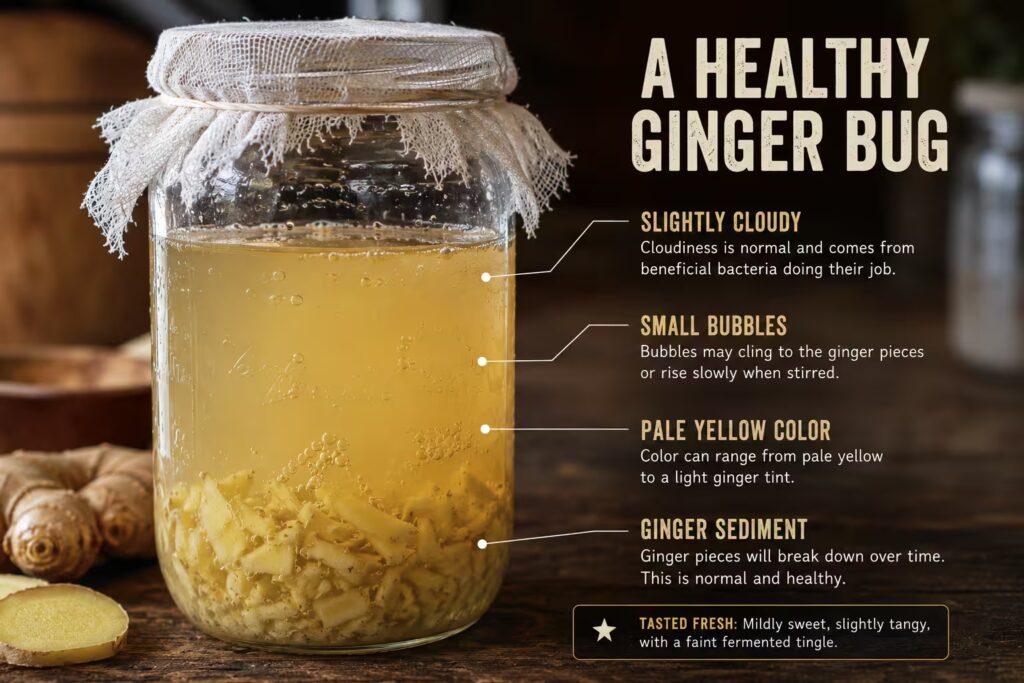
Some of the panic around ginger bugs comes from not knowing what normal looks like, so it’s worth being specific.
An active ginger bug is slightly cloudy, that’s expected and harmless, mostly lactic acid bacteria doing their job. The liquid may be pale yellow or carry a faint ginger tinge. Small bubbles may rest on the ginger pieces at the bottom or rise slowly when you stir. Tasted fresh, it should feel mildly fermented on the tongue — a faint tingle, slightly sweet, a little sharp.
It doesn’t need to be aggressively bubbling to be working. The vigorous foam you see in early videos happens during peak activity, usually around days two and three. After that, things calm down considerably. That’s the ferment maturing, not failing.
Why Ginger Bugs Stop Bubbling
Here’s what most beginner guides skip: ginger bug fermentation doesn’t run at a constant pace. It runs in phases.
The early burst, typically days one to three, is fast and visible because wild yeast is burning through easily available sugars. After that initial rush, activity slows. Lactic acid bacteria become more dominant, producing acid that stabilizes the environment but generates less visible CO2. The bug isn’t dying. It’s maturing.
This is where most people restart unnecessarily, which is one of the most common fermentation mistakes across all wild ferments. If your bug was bubbling and has since gone quiet, with no mold and no foul smell, there’s a good chance it’s done and ready to use, not dead. Run the activity test before you touch anything.
Problem-by-Problem Fixes
Bubbles disappeared right after feeding
When you add fresh ginger and sugar, you dilute the culture and shift the pH slightly. The microbes need time to adjust and consume the new food before producing visible CO2 again. This is normal. Give it twelve to twenty-four hours after a feeding before drawing any conclusions. If it happens after every single feeding and never recovers, the issue is likely temperature or water quality, both covered below.
Never bubbled at all — Day 3-5
The most common cause is water. Chlorinated tap water kills or significantly inhibits the wild yeast and bacteria you’re trying to cultivate. Switch to filtered or bottled water immediately, do a fresh feeding, and give it two full days before deciding anything.
The second most common cause is temperature. Below about 65°F (18°C), wild fermentation slows to almost nothing. Ginger bugs need warmth — 70–78°F (21–26°C) is the working range. The top of the refrigerator where the compressor generates heat, a corner near the stove, or a turned-off oven with just the light on all work reliably.
Third possibility: irradiated ginger. Conventionally grown ginger is often irradiated before sale, which destroys the wild microbes living on the skin. If you’ve been using non-organic ginger, that may be the problem. Switch to fresh organic, leave the skin on, and start again.
Old School Tip: Fresh ginger beats old ginger every time. A dry, wrinkled root from the back of the produce bin has fewer active microbes on the skin. Buy the freshest you can find.
Bubbled strongly for 2 days, then went completely flat
Keep feeding it. The culture burned through the initial sugar supply quickly — which is actually a sign of a vigorous start, not a problem. Continue daily feedings of equal small amounts of fresh grated ginger and plain sugar, and within two to three days you should see steady, moderate activity return. That reliable, consistent bubbling is what you’re looking for, not the early frantic fizz.
One thing worth knowing: if you make sourdough, the yeast from your starter can occasionally colonize a nearby ginger bug in those first few days, produce fast early activity, then fade because the strains aren’t right for a long-term ginger ferment. If you suspect this, keep the cultures on opposite sides of the kitchen and use organic ginger to help the native strains establish themselves.
Ginger Bug is thick, syrupy, or slimy
Thickness almost always means one thing: more sugar than the fermentation rate can consume. The culture isn’t keeping up, so it accumulates and the liquid thickens.
This usually happens when a cold, sluggish bug is still being fed on schedule. Move it somewhere warmer and skip one feeding entirely — let the existing sugar get used before adding more. Once it warms and becomes active, the texture should normalize within a day or two. If thickening comes with a foul smell or visible mold, that’s a different situation.
Smells strange
A ginger bug develops character over time. Slightly yeasty, mildly sour, faintly sweet — all within normal range. A healthy bug smells something like a very mild, natural ginger ale.
What you’re watching for: sharp sourness like nail polish remover, anything putrid or genuinely rotten, or a smell that turns your stomach rather than just surprising you. A mild sulfury note isn’t automatically a problem — some wild yeast strains produce small amounts of sulfur during fermentation. Give it another feeding and check the next day. If it resolves, continue. If it worsens or turns clearly foul, discard.
Turned pink or cloudy
Cloudiness is normal and expected — it’s bacterial activity and yeast sediment, nothing harmful.
Faint tinting, a pale yellow or very slight color shift, can happen depending on water mineral content, ginger variety, or regional wild strains. Vivid pink or red coloration appearing alongside off smells, unusual texture, or surface growth is a different matter. When color change comes with other warning signs, trust that combination and restart. Grey, black, or brown discoloration warrants a restart regardless of smell.
White film or mold on the surface
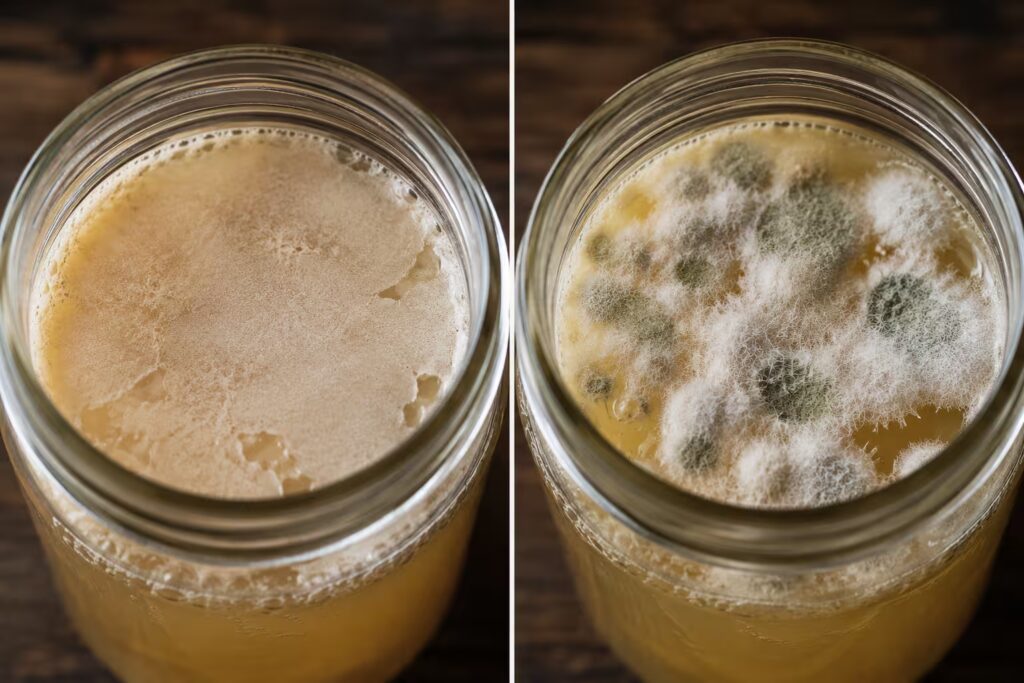
A thin, flat, matte white film is most likely kahm yeast; A surface growth common in wild ferments that is harmless but signals an imbalance in the ferment environment. Kahm is flat, smooth-edged, and papery. Skim it off, do a clean feeding, and monitor.
Mold has texture: fuzzy, raised, visibly structured growth that may be white, grey, green, or black. If you’re genuinely uncertain whether you’re looking at kahm or mold, restarting is the right call. The cost of a new batch is lower than the uncertainty of proceeding with something you can’t confidently identify.
 Take Heed: Discard if you see fuzzy or textured mold, smell something genuinely rotten, or notice grey or black discoloration. These are contamination signals, not normal fermentation behavior.
The Four Root Causes Behind Most Failures
Almost every ginger bug problem traces back to one of these four variables. It’s rarely mysterious once you know what to look for.
- Water quality is the single most common culprit. Chlorine kills or suppresses wild yeast and bacteria directly. Use filtered or bottled water for every feeding. Leaving tap water out overnight can help with free chlorine, but won’t address chloramines, which require a proper filter.
- Temperature is the second most common issue. Too cold means too slow, and too slow looks exactly like failure. Find a consistently warm spot in your kitchen — 70–78°F (21–26°C) — and leave the jar there. Moving it around adds variability that makes troubleshooting harder.
- Sugar type matters more than most people expect. Plain white sugar, organic cane sugar, and raw sugar all work well. Honey and maple syrup have antimicrobial properties that work against the culture you’re trying to build. Zero-calorie sweeteners provide no fermentable sugar at all.
- Ginger freshness and source determines how many wild microbes you’re starting with. The yeast and bacteria live on the skin of fresh organic ginger. Old ginger, irradiated ginger, and peeled ginger start with far fewer of them. Buy organic, use it fresh, leave the skin on.
If all four of these are right, almost every stall resolves with consistent daily feeding and time.
How to Revive a Stalled Ginger Bug
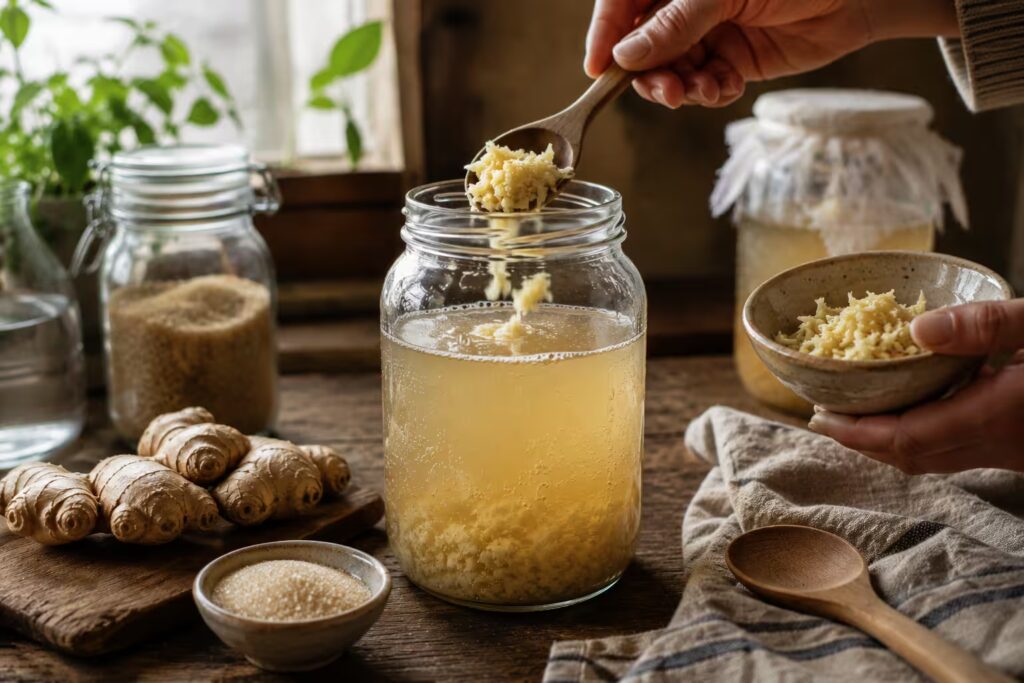
If the activity test came back positive but the bug is sluggish, try this before considering a restart.
Move the jar somewhere 5–10°F warmer. Pour off about a quarter of the liquid — this removes accumulated acids that may be suppressing activity. Add fresh grated organic ginger and plain sugar dissolved in a small amount of filtered water. Stir well, cover loosely with cloth, and leave it undisturbed for twenty-four hours.
In most cases that’s enough to restart visible activity. Repeat for two to three days until the bug reliably produces bubbles within twelve hours of a feeding. Once it’s active and you’re ready to bottle, knowing how and when to burp your fermentation jars matters — a healthy bug builds pressure quickly once it’s sealed.
When to Actually Start Over
Restarting is not failure. It’s the right call in the right circumstances.
Start over if you see fuzzy or textured mold anywhere in the jar, the smell is genuinely foul and doesn’t improve after a feeding, the bug has sat in the refrigerator unfed for more than three to four weeks, or it has shown zero signs of activity after seven full days of proper care — filtered water, warm temperature, organic ginger, daily feeding.
Day seven is the threshold. Not day three, not day four. Wild fermentation runs on its own schedule, and most guides that say “start over after two or three days” are ending viable cultures early. Give it the full week.
Keeping Your Ginger Bug Active Long-Term
Once established, you have two modes: room temperature and refrigerator storage.
At room temperature, feed it daily with small equal amounts of fresh grated ginger and plain sugar. Stir once a day, keep it covered with a breathable cloth, and replenish after each use. In the refrigerator, it goes dormant but stays alive. A weekly feeding is enough to keep it viable. When you’re ready to use it again, bring it back to room temperature, give it one or two feedings, and wait for active bubbling before adding it to a drink. For the ratios on how much starter to use per batch, the fermentation calculator handles that math.
A well-maintained ginger bug lasts indefinitely. People keep theirs for years.
Once your ginger bug is reliably active, use it to make homemade lacto soda.
FAQ
How long does a ginger bug take to get active? Most show visible activity within two to five days at 70–78°F (21–26°C). Cooler conditions can push this to seven days or more. Don’t make any decisions until day seven at the earliest.
My bug was bubbling and now it’s stopped — is it dead or done? Usually done, not dead. Run the activity test: one teaspoon of bug liquid stirred into sugar water, checked after six to eight hours. If you get bubbles, it’s alive and likely ready to use. Bubbling slows naturally as fermentation matures — a calm bug and a dead bug are not the same thing.
Why does my ginger bug bubble when I stir it but not otherwise? Stirring agitates dissolved CO2 out of suspension. That’s a positive sign — it means CO2 is being produced and held in the liquid rather than escaping. Your bug is active.
My ginger bug won’t carbonate my drinks. What’s wrong? Common causes: the bug wasn’t fully active before bottling, the bottles aren’t sealing properly, or the secondary ferment temperature is too cold. If the drink itself is thickening or behaving oddly rather than just lacking fizz, see the post on why ginger beer goes thick — that’s a different issue from a weak starter.
Can I use honey instead of sugar? Not reliably. Honey has natural antimicrobial properties that interfere with wild fermentation cultures. Plain white sugar, organic cane sugar, and raw sugar all work consistently. Some people use coconut sugar with success, but plain sugar is the easier starting point.
Do I need to peel the ginger? No. The wild yeast and bacteria that drive fermentation live on the skin. Organic unpeeled ginger gives you the best start. Non-organic ginger is often treated in ways that reduce the microbial load on the skin — which is the main reason organic works better here, not just pesticide avoidance.