
Honey fermented garlic is one of those ferments that predates instructions, ratios, and internet arguments. People made it because it worked, because it kept, and because it asked very little in return. A jar of garlic and honey on the shelf was normal long before anyone tried to optimize it.
This ferment is not pickling and it is not salt brine fermentation. It runs on a different mechanism entirely. If your reference point is traditional garlic in brine, that is helpful context, but this is a separate path. If you want the salt based method, see Fermented Garlic: The Old School Method. This post stands on its own.
What honey fermented garlic is
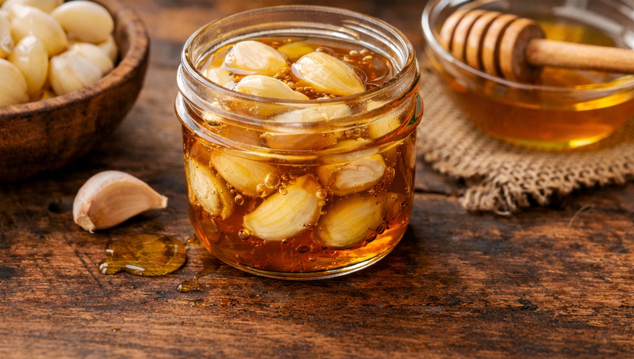
Honey fermented garlic is fresh garlic submerged in raw honey and left at room temperature. Over time, moisture is drawn out of the garlic into the honey. As the environment changes, fermentation begins. The honey thins, darkens, and develops acidity. The garlic softens and loses its raw bite.
There is no added water. There is no added salt. The preservation comes from submersion, acidity, and time.
This is fermentation by restraint, not control.
Why this ferment works
Raw honey contains wild yeasts and enzymes. Garlic contains moisture, sugars, and native microbes. When combined, osmotic pressure pulls liquid from the garlic into the honey. That diluted honey becomes a workable environment for fermentation.
As fermentation progresses, acidity increases and conditions stabilize. The garlic stays preserved, and the honey becomes both food and carrier.

Ingredients matter more than technique
You need only two ingredients.
Use raw, unfiltered honey. Pasteurized honey can work eventually, but raw honey ferments more reliably.
Use fresh garlic. Do not use pre peeled garlic. It is often treated and too dry to behave properly.
Nothing else belongs in the jar.
Honey Fermented Garlic Recipe
Ingredients
- Fresh garlic cloves
- Raw Honey
Steps
- Peel enough garlic cloves to fill a clean glass jar about halfway.
- Pour raw honey over the garlic until every clove is fully submerged. Leave some headspace.
- Stir gently with a clean utensil to release trapped air bubbles.
- Cap the jar loosely.
- Let it ferment at room temperature for at least one month, gently turning or stirring the jar once per day during the first week.
- Continue aging at room temperature until the flavor softens and deepens. Refrigeration is optional but will slow further change.
What to expect during fermentation
Within a few days, the honey will begin to thin. Small bubbles may rise when the jar is moved. This is normal.
Garlic cloves often float. This is normal. What matters is that they remain coated in honey.
The aroma should be sweet, garlicky, and slightly fermented. It should not smell rotten or sulfurous.
If you are unsure how to interpret fermentation smells, check out our post about fermentation smells. It will give you a lot of useful context
How long it takes
Honey fermented garlic is usable after about one month. At this stage, the honey has thinned and fermentation is underway, but the garlic still has some edge.
By three months, the flavor rounds out. The sharpness fades, the honey develops tang, and the cloves become noticeably softer.
At six months and beyond, the garlic turns mild and almost candy like. The honey darkens and deepens, losing raw sweetness and gaining complexity.
There is no hard stop. As long as the garlic stays submerged and the jar remains clean, honey fermented garlic can last for years.
Safety notes
Honey fermented garlic has a long history of traditional use. The concerns people raise online usually come from misunderstanding how this ferment works.
The key rules are simple. Use raw honey. Keep the garlic submerged. Discard the jar if you see fuzzy mold or smell anything rotten.
Infants under one year old should never consume honey in any form.
Mold and surface growth
True mold is fuzzy and colored. If you see it, discard the jar.
Yeast growth is uncommon in honey ferments but can occur if garlic is exposed. It is usually harmless.
If you are unsure what you are seeing, Kahm Yeast vs Mold will help you tell the difference.
How to use honey fermented garlic
Eat a clove straight if you want, especially once it has aged and softened. The heat is gone and it is closer to roasted garlic than raw.
The honey is where most people end up reaching first. It works anywhere a touch of sweetness and depth makes sense. Stir it into sauces, salad dressings, marinades, or glazes.
It shines on meat. Brush it onto chicken wings near the end of cooking so it caramelizes without burning, like this recipe for honey garlic chicken wings. Toss wings in the honey with a little salt and pepper and you do not need much else. It is just as good on roasted chicken thighs, pork, or grilled vegetables.
Use the garlic cloves and honey together when you want flavor without sharpness. You get richness instead of bite.
This is food first. Remedy second.
How this differs from salt brine fermented garlic
Salt brine fermented garlic is sharp, sour, and structured.
Honey fermented garlic is sweet, mellow, and soft.
They serve different purposes and belong on the shelf together, not in competition.
Final thoughts
Honey fermented garlic survives because it respects limits. No measuring. No gadgets. No correction once it starts.
If you can peel garlic and pour honey, you can make this ferment. That simplicity is not a shortcut. It is the method.
FAQs
Do I need to use salt?
No. Salt is not used in honey fermented garlic. This ferment relies on raw honey, moisture migration from the garlic, and time. Adding salt interferes with that process instead of improving it.
How do I know fermentation has started
The honey will thin within the first one to two weeks as moisture is drawn out of the garlic. Small bubbles may appear when the jar is moved. This is normal and indicates fermentation activity.
What if my honey crystallizes
Crystallization is normal with raw honey. The moisture from the garlic will usually dissolve the crystals over time. Do not add water to fix this.
Can I add spices or herbs
You can, but it is better to make a plain batch first. Extra ingredients add variables and make it harder to judge fermentation behavior.
Can I use peeled store bought garlic
No. Pre peeled garlic is often treated and lacks the moisture needed for proper fermentation. Use fresh whole bulbs.
How long does honey fermented garlic last
As long as the garlic stays coated and the jar remains clean, it can last for years. Flavor will continue to change slowly over time.
Does it need to be refrigerated
No. It can be stored at room temperature. Refrigeration is optional and will slow further fermentation.