
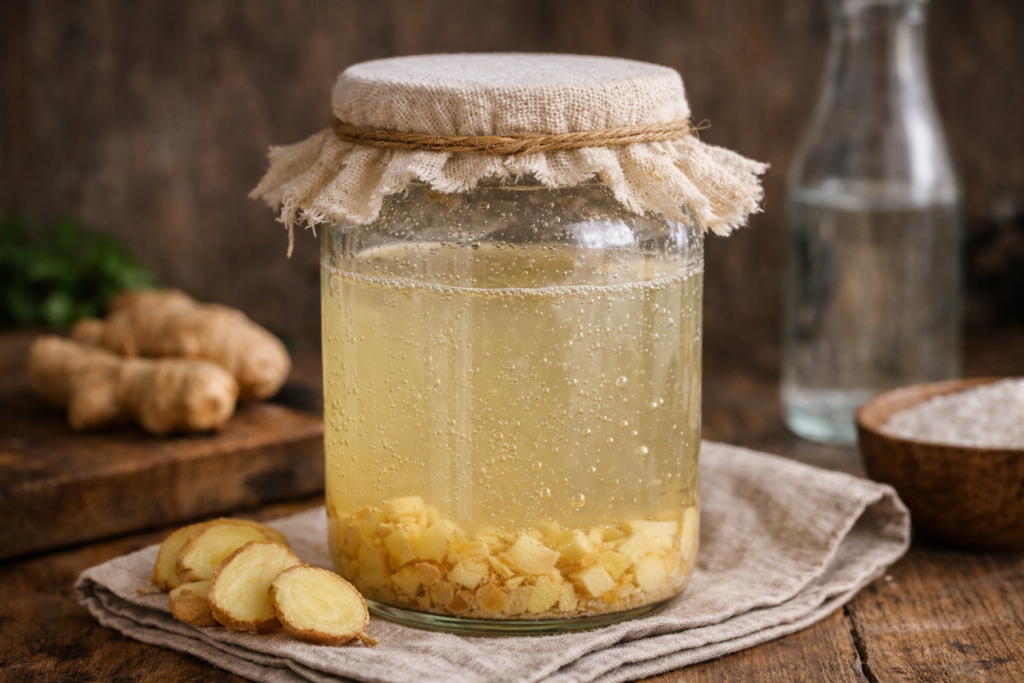
If your ginger bug not bubbling has you wondering whether it’s dead, the short answer is this: most inactive ginger bugs are not dead. They are stalled, cold, chlorinated, overfed, or simply early.
Bubbling is a sign of carbon dioxide production. Carbon dioxide forms when wild yeast consume sugar and begin fermenting. If you do not see bubbles, that does not automatically mean fermentation is not happening.
Let’s walk through what is actually going on and how to correct it.
What Bubbling Actually Means
A ginger bug is a wild fermentation. When you combine fresh ginger, sugar, and water, you create an environment where naturally occurring yeasts and bacteria can multiply.
The visible bubbles are carbon dioxide (CO₂).
That gas is produced when:
- Wild yeast metabolize sugar
- Alcohol is formed in small amounts
- CO₂ is released as a byproduct
If you do not see bubbles, one of three things is true:
- Fermentation has not started yet
- Fermentation is slow
- Fermentation is happening but not visibly
Understanding that difference prevents unnecessary restarts.
Normal Ginger Bug Timeline
Most healthy ginger bugs follow this pattern:
Day 1 to 2: Little visible activity.
Day 3 to 4: Light bubbling begins.
Day 5+: Noticeable fizz when stirred.
Temperature changes this dramatically.
Below 70°F, activity slows.
Above 75°F, activity accelerates.
Wild fermentation rewards consistency.

If your kitchen runs cool, move the jar to a consistently warm area such as above the refrigerator or near, but not on, a warm appliance. Stable warmth matters more than speed.
The 7 Most Common Reasons Your Ginger Bug Isn’t Bubbling
1. Chlorinated Water Is Inhibiting It
Chlorine suppresses microbial growth, including the wild yeast you are trying to cultivate. If you used untreated tap water, this alone can stall activity.
Use filtered water, or let tap water sit uncovered for 24 hours before using.
2. Temperature Is Too Low
Wild yeast become sluggish in cool environments. Under 68°F, fermentation may appear inactive for several days.
Move the jar to a consistently warm location, but avoid direct sunlight. Stable warmth matters more than heat.
3. Too Much Sugar
Excess sugar increases osmotic pressure and can slow yeast reproduction. Many beginners assume more sugar equals more activity. Often it does the opposite.
Use roughly 1 tablespoon of sugar per cup of water during startup.
4. Too Little Sugar
Yeast require fuel. Without sufficient sugar, fermentation slows or never fully establishes.
Feed daily with about 1 tablespoon sugar and 1 tablespoon freshly chopped ginger during the initial buildup phase.
5. Old or Treated Ginger
Some commercial ginger is irradiated or treated, which reduces the surface microbes responsible for starting fermentation. Fewer wild yeasts mean slower colonization.
Choose fresh, firm ginger. Organic can help, but freshness matters more than labeling.
6. Lack of Stirring
Carbon dioxide can remain dissolved in liquid until disturbed. If you never stir the jar, it may appear inactive even when fermentation has begun.
Stir once daily and observe whether small bubbles rise after agitation.
7. Airlock Confusion
Ginger bugs are traditionally covered with breathable cloth during startup, not sealed tightly. If sealed too early with an airlock, visible bubbling may be subtle or delayed.
Use a breathable cloth secured with a band during the startup phase. Once fermentation is active and you move to bottling, pressure management becomes relevant.
How to Tell If Your Ginger Bug Is Alive
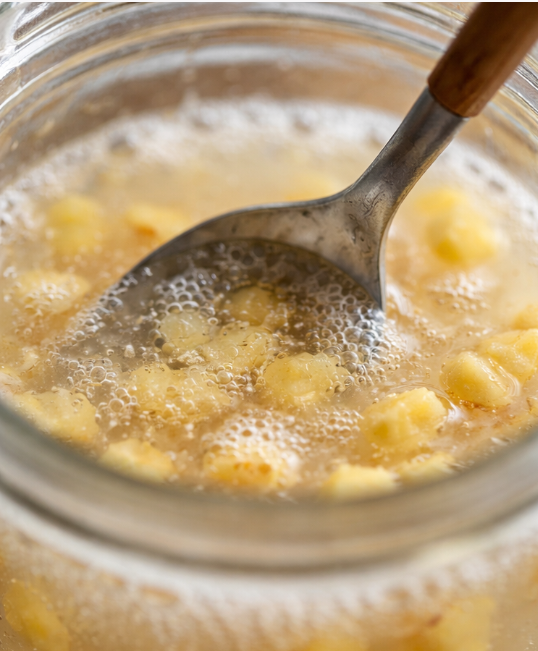
Even without dramatic bubbling, look for:
- Cloudiness in the liquid
- Tiny bubbles when stirred
- A mild yeasty aroma
- Slight fizz on the tongue
If it smells clean, lightly sweet, and mildly yeasty, it is likely active.
If the smell is sharply rotten or foul, that is different.
When It’s Just Slow — Not Dead
Wild fermentation does not behave like commercial yeast. It has lag phases.
The first few days are about microbial colonization. Visible fizz is not the only indicator of life.
Many ginger bugs show little visible activity until day 4 or 5. Restarting too early is one of the most common beginner mistakes.
When You Should Start Over
There are times when restarting is appropriate.

Discard immediately if you see fuzzy mold growth that appears dry and filamentous (white, green, black, or blue), or if the smell is putrid and rotten rather than mildly sour or yeasty.
Surface yeast films are not the same as mold. If you are unsure how to distinguish them, review Is Kahm Yeast Dangerous or Normal?.
Why Bubbles Matter for Ginger Beer
A strong ginger bug produces CO₂. That CO₂ carbonates ginger beer.
If your starter is weak, your finished soda will be flat.
Once fermentation is active and you begin bottling, pressure management becomes critical. See When and How to Burp Your Ferments for safe pressure release guidance.
Exploding bottles are not caused by a dead starter. They are caused by an active one that is sealed without pressure release.
Alcohol Clarification
Yes, ginger bug fermentation produces small amounts of alcohol.
Wild yeast convert sugar into:
- Ethanol
- CO₂
In an open ginger bug jar, alcohol remains minimal because oxygen is present and fermentation time is short.
Once bottled for ginger beer, alcohol levels can increase slightly, especially with extended fermentation.
For a broader discussion of fermentation byproducts and health claims, see Is Kombucha Actually Good for Gut Health.
What’s Happening Biologically
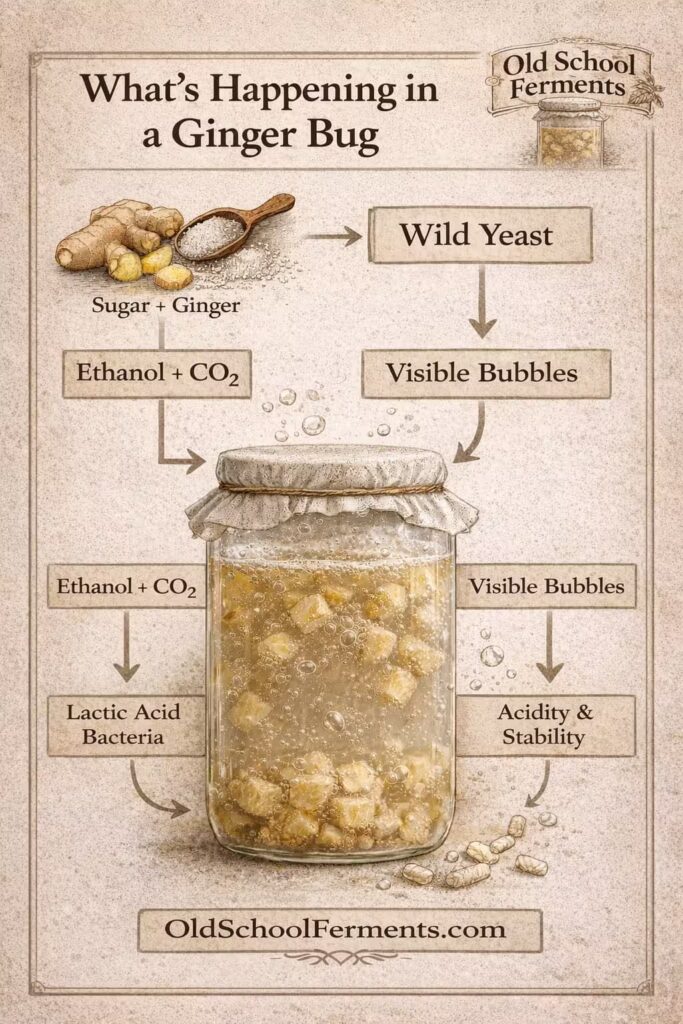
Wild yeast and bacteria live naturally on ginger skin.
When submerged in sugar water:
- Yeast begin consuming sugar
- Ethanol forms
- CO₂ forms
- Lactic acid bacteria begin competing
The microbial balance stabilizes over several days.
Cloudiness often indicates bacterial growth. Bubbling indicates yeast activity.
If neither develops after 5 to 6 days in warm conditions, something inhibited growth. Most often it is water quality or temperature.
For a deeper look at stalled fermentation in general, see Ferment Not Bubbling: Is It Dead? What It Really Means.
Common Mistakes That Stall Ginger Bugs
Many stalled ginger bugs are the result of overhandling:
- Constantly changing sugar ratios
- Moving jars between rooms
- Sealing too tightly
- Refrigerating too early
For broader patterns that ruin batches, review Common Fermentation Mistakes That Ruin Batches and How to Fix Them.
Stability matters more than intervention.
Final Perspective
If your ginger bug not bubbling is your only symptom, there is usually no cause for alarm. Most stalled starters are reacting to environmental conditions, not contamination or failure.
Adjust temperature. Use filtered water. Feed consistently. Stir daily. Stability matters more than intervention.
Wild fermentation is not immediate. When activity begins, it becomes unmistakable.