
Yes, you can ferment vegetables in plastic, but only if the container is food grade. For home fermentation, the only plastics I recommend are HDPE (#2) and polypropylene (#5). If a container is not clearly marked food grade, do not use it.
Plastic is not inherently unsafe for fermentation. Unknown, thin, or damaged plastic is. When in doubt, glass or ceramic is always safe.
Fermentation is acidic, and acid slowly breaks down weak plastics. Cheap containers can leach chemicals and shed microplastics over time, which is why container choice matters for both safety and flavor.
Safe plastics You Can Ferment In
HDPE (#2)
Slightly flexible with a dull or matte surface, usually opaque white or natural-colored. You’ll see a “2” inside the recycling triangle and the letters “HDPE.” Common examples: milk jugs, food-grade five-gallon buckets, brewing fermenters, vinegar or juice jugs, and heavy water containers. Avoid any bucket that once held paint or chemicals—they’re not food-safe.
PP (#5)
Smooth, sometimes shiny, and either translucent or solid white. Marked with a “5” and “PP.” It feels a bit harder and more rigid than HDPE. Common examples: thick yogurt tubs, sour cream containers, reusable deli or takeout containers, and many fermenter lids or spigots.
If the container does not clearly meet these markers, it is not worth the risk for fermentation.
How to Identify Food-Grade Plastic
Turn the container over and look for the recycling triangle symbol. Inside that triangle will be a number—the resin code.
• A 2 means HDPE (High-Density Polyethylene).
• A 5 means PP (Polypropylene).
Food-grade plastics are often stamped with “HDPE” or “PP” next to the number and may say food safe, BPA-free, or NSF/FDA approved.
Look and feel:
• HDPE – Slightly flexible, dull or matte surface, usually opaque or milky white.
• PP – Smooth, firm, and sometimes translucent or shiny.
If it’s thin, brittle, or unlabeled, skip it. Real food-grade containers feel sturdy and have no chemical smell.
Microplastics and Fermentation
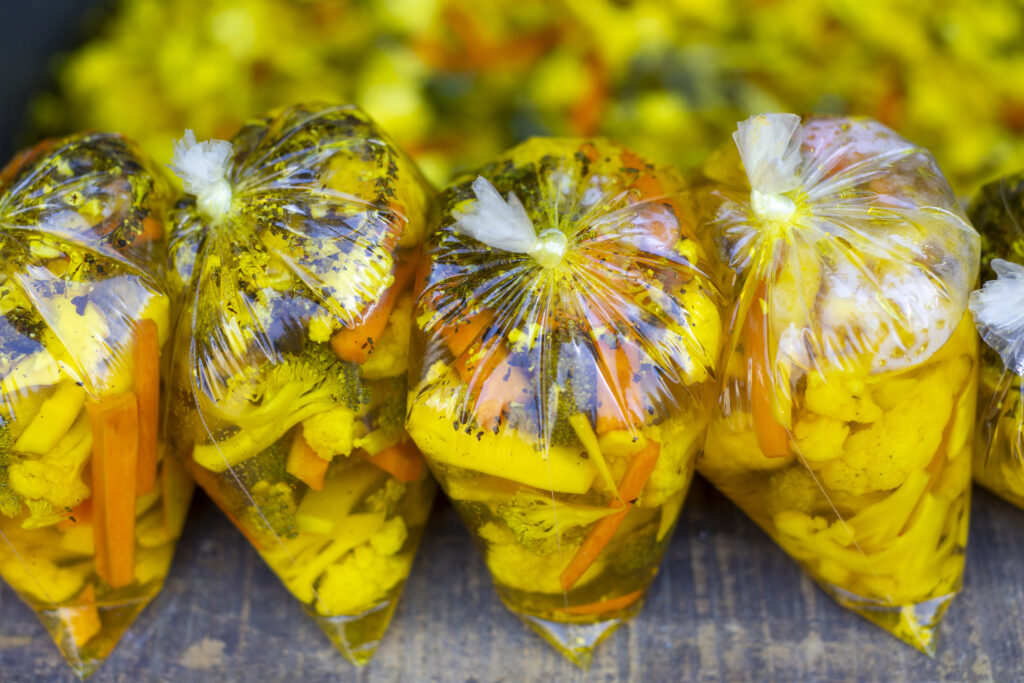
Every time plastic gets scratched or flexed, tiny particles can separate from the surface. In acidic environments like a ferment, that process speeds up. These microplastics don’t change the taste, but they can end up in your food. HDPE and PP hold up far better than other plastics, but replace them once they turn cloudy, scratched, or rough.
 Old School Tip: Old-timers often fermented in clean pickle buckets. That’s still fine—just make sure it’s food-grade, neutral-smelling, and in good condition. If it’s scratched or yellowed, retire it.
Government guidance
The National Center for Home Food Preservation, in partnership with the USDA, confirms that “Food-grade plastic and glass containers are excellent substitutes” Read their full recommendations here: Suitable Containers for Fermenting Food – NCHFP/USDA.
Glass vs. Plastic
Glass and ceramic crocks are completely inert and last for life, which is why most seasoned fermenters eventually switch. Plastic is fine for getting started, testing recipes, or doing small batches. When you’re ready to invest, upgrade to glass jars or ceramic crocks—they’re safer, easier to clean, and don’t scratch.
If you’re setting up your first batch, read Best Containers for Fermentation to see how each option compares.
A Note About Metal
Never ferment directly in metal containers. The acid in brine reacts with most metals, releasing metallic flavors and sometimes toxic compounds. Even stainless steel can pit or corrode over time. Metal lids or weights are fine only if they’re coated or lined with food-safe enamel, glass, or plastic so the brine never touches bare metal.
Old School Tip: Old school fermenters sometimes used enamel crocks or lined tin jars—those are safe as long as the coating is fully intact. Once it chips, retire it immediately.
Bottom Line
Yes, you can ferment vegetables in plastic safely, but only if the container is food-grade HDPE (#2) or polypropylene (#5) and replaced once it shows wear. Scratched, cloudy, thin, or unlabeled plastic should not be used for fermentation.
For long-term fermenting, glass jars and ceramic crocks remain the old-school standard. They are inert, durable, and eliminate concerns about wear, leaching, or microplastics altogether.