
Most people don’t mess up sauerkraut because it’s hard. They mess it up because no one tells them what normal actually looks, smells, and tastes like along the way. Cabbage ferments aggressively. It smells weird. It takes longer than expected. And it looks wrong before it looks right.
This guide is not about tradition or vibes. It’s about making sauerkraut that ferments safely, tastes good, and doesn’t send you spiraling halfway through the process.
What You Actually Need
You do not need a crock, a starter culture, fancy weights, or special lids. You need cabbage, salt, a jar, and patience.
- Use green cabbage. Red cabbage works, but it behaves slightly differently and confuses beginners.
- Use plain salt. Sea salt, kosher salt, or pickling salt are fine. Do not use iodized salt.
- Use a clean glass jar. A wide mouth quart jar is ideal.
How Much Salt to Use
This is where most people start screwing things up.
Use 2 percent salt by weight. That means 20 grams of salt per 1,000 grams of cabbage. If you don’t want to weigh, that works out to roughly 1.5 to 2 teaspoons of salt per pound of cabbage, depending on grind size.
If you eyeball salt, you risk slow fermentation, soft kraut, or excessive saltiness later. If you want a deeper explanation of why ratios matter, see the simple salt ratio guide. If you’re unsure whether to dry salt or add water, dry brining vs wet brining breaks that down.
How to Prep the Cabbage
Remove the outer leaves. Cut the cabbage into quarters. Remove the core. Slice it thin. Thickness matters less than consistency. Even cuts ferment more evenly and predictably.
Put the sliced cabbage in a bowl. Sprinkle the salt over it. Let it sit for about 10 minutes, then massage it with your hands. Squeeze, press, and knead until liquid releases. This step is not optional. You are creating the brine that protects the ferment.
After a few minutes, the cabbage should feel wet and flexible, sitting in its own liquid. If it still feels dry and stiff, keep working it. Nothing is wrong yet.
Packing the Jar
Pack the cabbage tightly into the jar. Press it down firmly with your fist or a tamper as you go. Pour any remaining brine over the top.
The cabbage must stay submerged. Exposure to air is what causes mold. This is also why surface growth happens when cabbage floats, not because the batch itself is bad.
If needed, use a small weight, a folded cabbage leaf, or a clean glass to keep everything below the brine.
Leave about an inch of headspace. Fermentation produces gas and liquid movement, and this space prevents overflow.
Cover the jar loosely. A fermentation lid is fine. A regular lid loosened slightly also works.
What Happens Next and Why People Panic
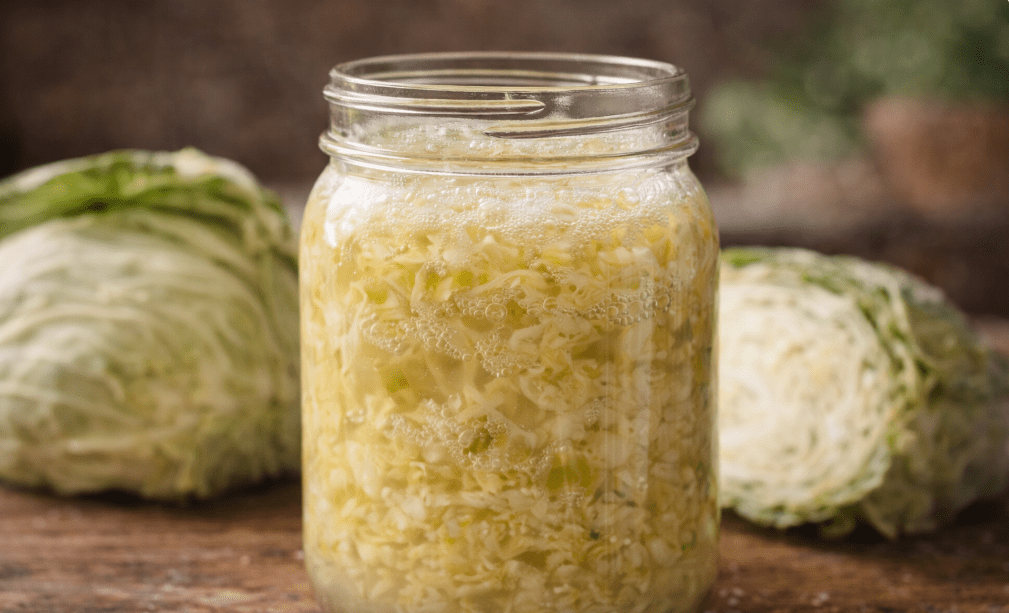
Within a day or two, you should see bubbles. The brine may turn cloudy. The smell may be sharp, sour, or sulfurous. This is normal.
Cabbage releases sulfur compounds during fermentation, and that smell can be strong early on. If you’re worried your sauerkraut smells bad, this sulfur smell is usually normal at this stage. You can read more about it in Why Does My Sauerkraut Smell Like Sulfur or Poop? and What a Normal Ferment Should Smell Like.
Cloudy brine is expected. It is a sign of active fermentation, not spoilage. If that bothers you, Why Ferments Turn Cloudy explains exactly what’s happening.
How Long Sauerkraut Takes to Ferment
Sauerkraut does not become sour overnight. This is where most beginners lose confidence. This is usually the point where people start adjusting things that don’t need fixing.
At room temperature, fermentation usually takes two to four weeks. You can taste it as it goes. Early kraut tastes salty and flat. Over time, it becomes tangy and complex.
If your sauerkraut isn’t sour yet, nothing is wrong. It’s just early. This is covered in detail in Why Your Sauerkraut Isn’t Sour (And How to Fix It).
Bubbles slowing down does not mean fermentation stopped. That misconception is addressed in Ferment Not Bubbling: Is It Dead? What It Really Means.
How to Tell When Sauerkraut Is Done (And When It Isn’t)
Sauerkraut is done when it tastes good to you. There is no finish line bell and no exact day it must be eaten.
At that point, the cabbage should be pleasantly sour, still crisp, and fully submerged. The smell should be clean and acidic, not rotten or putrid.
If it tastes flat or overly salty, it likely just needs more time. If it tastes sharply acidic and balanced, it’s ready.
For a dedicated breakdown of readiness signs, timelines, and taste testing, see When Is Sauerkraut Done Fermenting?.
What to Do If Something Looks Wrong
Before you try to fix anything, pause. Most sauerkraut that looks strange is still fermenting normally. The real question is not whether it looks weird, but whether it actually requires action.
If you see a thin white film on the surface, it is often kahm yeast. It can look alarming, but it is not mold and usually does not mean the batch failed. It forms when oxygen is present and is mostly a cosmetic issue. If you’re unsure how to tell the difference, see the guide on kahm yeast.
If you see fuzzy growth that is blue, green, or black, that is mold. If it has penetrated the cabbage, the batch should be discarded. This is uncommon when salt levels are correct and everything stays submerged. The signs and prevention steps are covered in this mold identification guide.
If you’re unsure what you’re seeing, don’t guess. Start with a general overview of common sauerkraut problems and work from there.
Why This Is Safe
Properly fermented sauerkraut is very safe. The acidity created during fermentation protects it, and harmful bacteria cannot survive once the process is established.
Botulism is not a realistic risk when salt levels are correct and the cabbage stays submerged. That fear comes up often, but it doesn’t match how vegetable fermentation actually works. If this is still a concern for you, you can read more about it in Can You Get Botulism From Fermented Foods?.
Botulinum toxin only forms under very specific conditions. As the CDC explains, it requires “low oxygen, low acid, low sugar, low salt, a certain temperature range, and a certain amount of water.” Properly fermented sauerkraut becomes acidic quickly, which prevents this from happening.
Storing Finished Sauerkraut
Once the sauerkraut tastes the way you like, move the jar to the refrigerator. Cold temperatures slow fermentation and help preserve both flavor and texture.
When kept refrigerated and fully submerged, sauerkraut will last for months. If you want a full breakdown of storage options, shelf life, and signs of spoilage, see How to Store Sauerkraut.
Finally, the closing section.
If You’re Worried You Messed It Up
If you used enough salt, kept the cabbage submerged, and gave it time, you didn’t screw it up. Sauerkraut is forgiving. Most failed batches are actually just rushed batches.
This process looks messy before it looks right. That’s normal. Trust the method.