
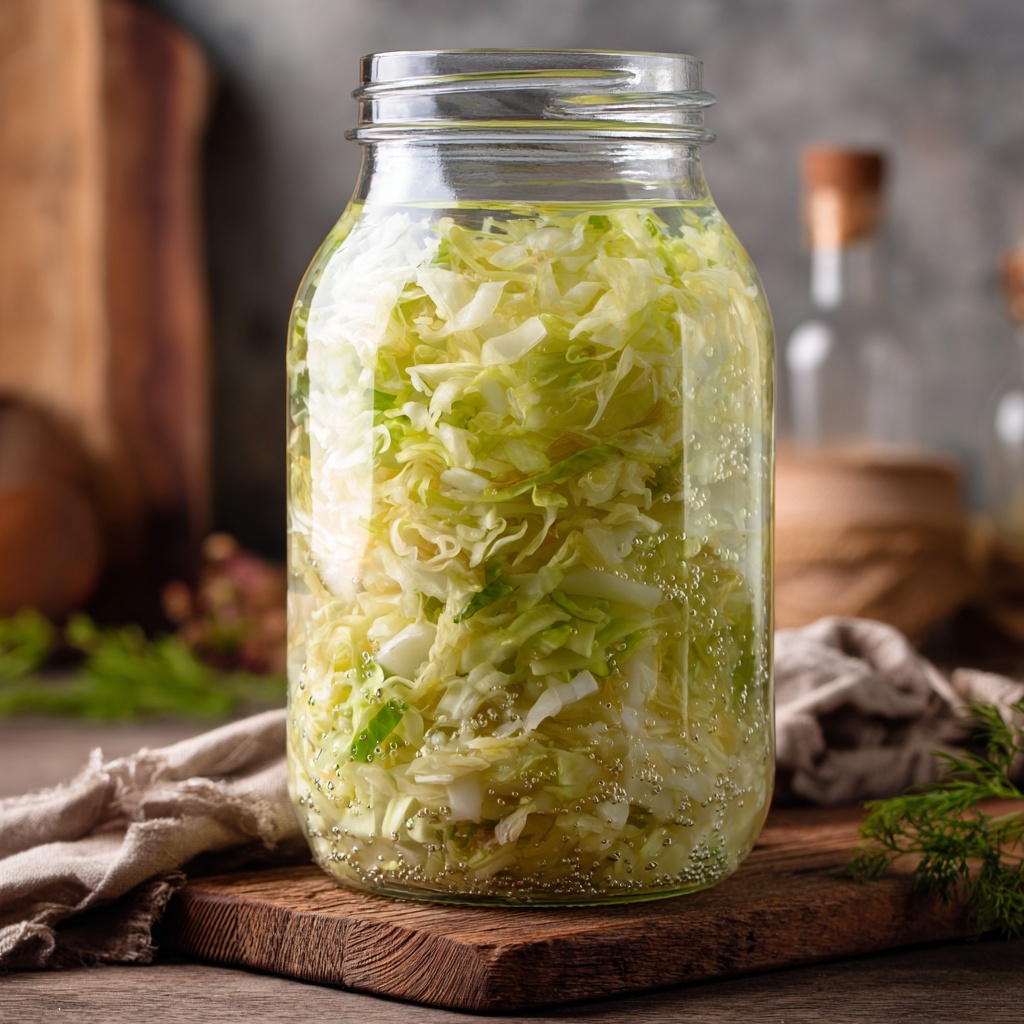
Homemade sauerkraut rarely stays the same from day to day. The smell changes. The taste shifts. The brine can turn cloudy. For anyone new to fermenting, those changes trigger the same thought. Something must be wrong.
Most of the time, nothing is wrong. Sauerkraut is a living ferment, and changes in smell, tatste, and appearance are part of the process. As the good bacteria take over, they create new aromas, flavors, bubbles, and visual changes that can look scary if you do not expect them.
Food safety guidance from Ohio State University Extension explains that properly fermented sauerkraut undergoes predictable changes in acidity, aroma, and texture as beneficial bacteria become established.
This page helps you figure out what kind of issue you are dealing with and points you to the exact fix. No panic. No guesswork.
Start here before you toss a batch. Look at your jar, then choose the closest match below.
- It tastes too salty
- It tastes bitter, harsh, or just wrong
- It smells strong, sulfur like, or chemical smelling
- The brine turned milky or cloudy
- Something is growing on the surface
If Your Sauerkraut Tastes Too Salty
This is the most common complaint, and it is often not a real problem. Early sauerkraut can taste aggressively salty in the first few days, especially if you sample before the fermentation has time to round out.
Saltiness usually comes from one of four things. Too much salt, uneven mixing, tasting too early, or not letting the ferment finish mellowing. In most cases, it is a balance issue, not a safety issue.
Read this next: sauerkraut too salty how to fix it and prevent it
If Your Sauerkraut Tastes Bitter, Harsh, or “Off”
Harsh flavors often show up when fermentation is still settling in. Early stages can taste sharp and unbalanced, then improve as the bacteria shift and the acidity stabilizes. Temperature swings and uneven fermentation can also create a harsh edge that fades with time.
What matters is the overall picture. Bitter or harsh is not the same as rotten. If the smell is clean sour and the texture looks normal, patience often fixes what your tongue thinks is a problem.
If Your Sauerkraut Smells Strong or Unpleasant
Fermentation produces gas, and gas carries smell. Some batches smell gently sour. Others smell sharp, funky, or even slightly alcoholic early on. That range can still be normal.
You are looking for the character of the odor.
Normal smells tend to be clean sour, tangy, and cabbage like, even if they are intense. Red flag smells are sewage like, rotten, or chemical.
If Your Sauerkraut Looks Milky or Cloudy
Cloudy brine is one of the most misunderstood changes in fermentation. In most cases, it is harmless. The cloudiness comes from active bacteria and fine cabbage particles suspended in the liquid.
Cloudy brine by itself is not spoilage. Many healthy ferments go cloudy, then clear as activity slows.
Read this next: why fermented brine turns cloudy and what it means
If You See Growth on the Surface
This is the one category that deserves real caution. Some surface films are harmless yeast. Others are mold, and mold is not something to debate.
Shape and texture matter. A flat white film is not the same as fuzzy growth with height. Color matters too. When you are unsure, do not taste it.
Read this first: mold vs kahm yeast on ferments how to tell the difference
How to Decide What to Do Next
Taste issues are usually fixable or temporary. Smell issues require context and patience unless the odor is clearly rotten or chemical. Visual changes often look worse than they are, with one exception: true mold.
When something feels off, slow down. Pick the category that matches what you are seeing, then follow the deep dive for that exact problem. That is how you stop wasting batches and stop second guessing yourself.
Related Sauerkraut Fixes and Deep Dives
If you have identified the general issue but want step by step guidance, these pages go deeper into the most common sauerkraut problems. Each one focuses on a single issue so you can fix it without guessing or overcorrecting.
 Old School Tip: Fermentation is judged over days and weeks, not minutes. Smell and taste change fast early on. Most mistakes are not mistakes at all, just impatience.